
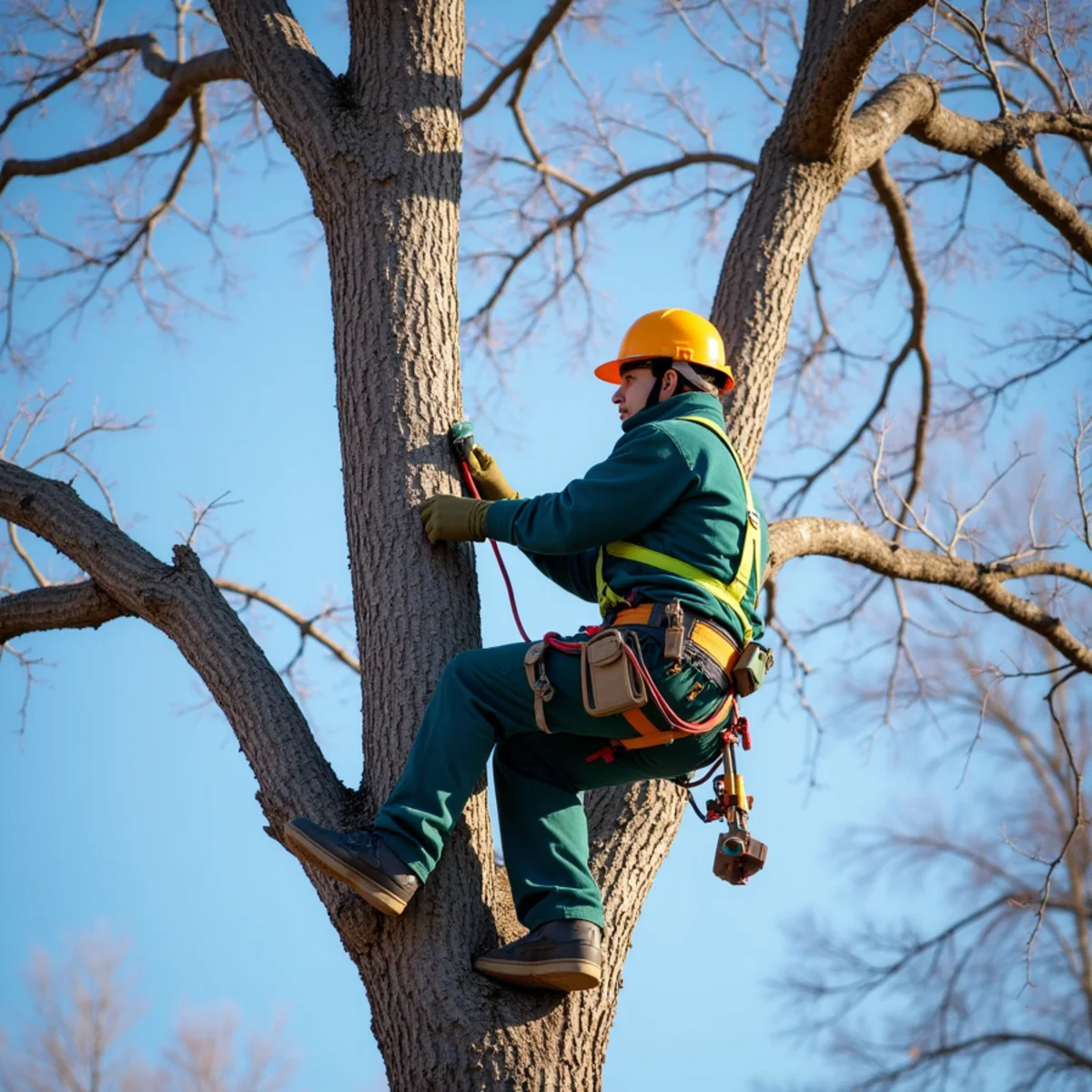
Late fall through early spring is often described as Colorado’s tree-trimming season. That is a helpful starting point, not a universal rule. The best timing depends on why the tree is being pruned, the species, its health, the size of the cuts, and whether a branch presents a safety concern now. Understanding those distinctions helps homeowners avoid both unnecessary delay and poorly timed cosmetic cutting.
Why dormant-season pruning is popular
Without leaves, branch structure is easier to see. Dead, rubbing, crowded, and competing branches are easier to trace to their attachments. Many trees are also less physiologically active, and several insects or disease organisms are less active during cold weather.
Dormant work can also reduce disruption to lawns and beds when the ground is firm, although snow, ice, or saturated soil can create other access limits. The advantage is not simply that winter is cheaper or easier; it is that structure is visible and the tree is often in a suitable stage for planned cuts.

Safety pruning should not wait for a preferred month
A cracked limb over a bedroom, hanging branch above a walk, or split leader after wet snow deserves prompt attention. Waiting for dormancy does not improve a defect that may move in the next wind. The work can be limited to the immediate hazard, with broader maintenance scheduled later if appropriate.
Keep people away from the area and never approach branches touching electrical conductors. Utility involvement and tree work may need coordination. Take photos from a safe position if insurance or storm documentation may be relevant.
Species and objectives change the calendar
Flowering trees may be pruned after bloom when preserving the current year’s display matters. Some conifers require little routine interior pruning and respond poorly to cuts into bare old wood. Young shade trees can often receive light structural work during dormancy before defects become large.
The objective matters too. Deadwood can be removed when identified. Clearance may follow property use and growth. Structural pruning is planned around long-term form. Heavy reduction should never be justified only by a date on the calendar.
Avoid pruning during avoidable stress
A severely drought-stressed or recently transplanted tree may need conservative treatment. Removing too much live crown reduces photosynthetic area when the tree is already struggling. Hot, dry periods can also make large unnecessary cuts more stressful.
Storm-damaged trees are different because broken material cannot always remain. In that case, preserve sound branches, make correct cuts back to suitable points, and avoid turning cleanup into a complete crown strip.
Build a property-specific pruning rhythm
Not every tree needs annual pruning. Young trees may benefit from periodic structural checks; mature trees may need deadwood and clearance inspections on a different cycle. A schedule based on defects and growth is more useful than trimming every tree simply because another year passed.
Walk the property after leaf drop and after major weather. Look for broken branches, new clearance conflicts, weak unions, and changes in lean. Documenting the same views over time helps distinguish normal growth from sudden change.
Use the pruning season to plan, not to rush
Dormant months can become busy after storms or when many owners schedule work at once. A calm inspection before the preferred window gives you time to define objectives, compare scopes, and move vehicles or outdoor items that affect access. It also prevents the crew from arriving with only the vague direction to make the tree smaller.
Mark specific concerns with photos: the branch over the roof, the dead limb above the drive, or the leader that split last winter. The estimator can then separate work that belongs in the next pruning visit from defects that deserve quicker action. Timing becomes part of a plan rather than a reason for indiscriminate cuts.
Use a timing hierarchy, not a fixed Colorado date
Start with the reason for the cut. Routine structural or clearance work on many deciduous trees often fits the late dormant period, when leaves are absent and branch relationships are easy to inspect. Watch the tree rather than relying on a date copied from another year: bud swell, a warm spell, elevation, exposure, and species can shift the practical window across the Front Range.
Then check for an exception. Broken or hanging material over an occupied area should not wait for an ideal season, while branches touching or near utility lines require the appropriate utility safety response. Flowering objectives may favor work after bloom. Disease-management pruning can have its own timing; for example, CSU Extension places removal of fire-blight-infected wood in the dormant season. Confirm the species and problem before turning that example into a rule for every tree.
Finally, separate timing from technique. A late-winter appointment does not make topping, flush cuts, indiscriminate thinning, or excessive live-crown removal appropriate. The written scope should name the tree, objective, branch or clearance concern, intended pruning method, and cleanup. If those decisions are unclear, changing the month will not improve the result.
Authoritative Aurora references
What to do next
Colorado’s best pruning season is a decision, not a slogan. Dormancy offers real advantages, but the tree’s condition and the purpose of each cut come first. For an Aurora-area pruning scope that explains what should be removed and what should remain, contact MQ’s tree-service line.