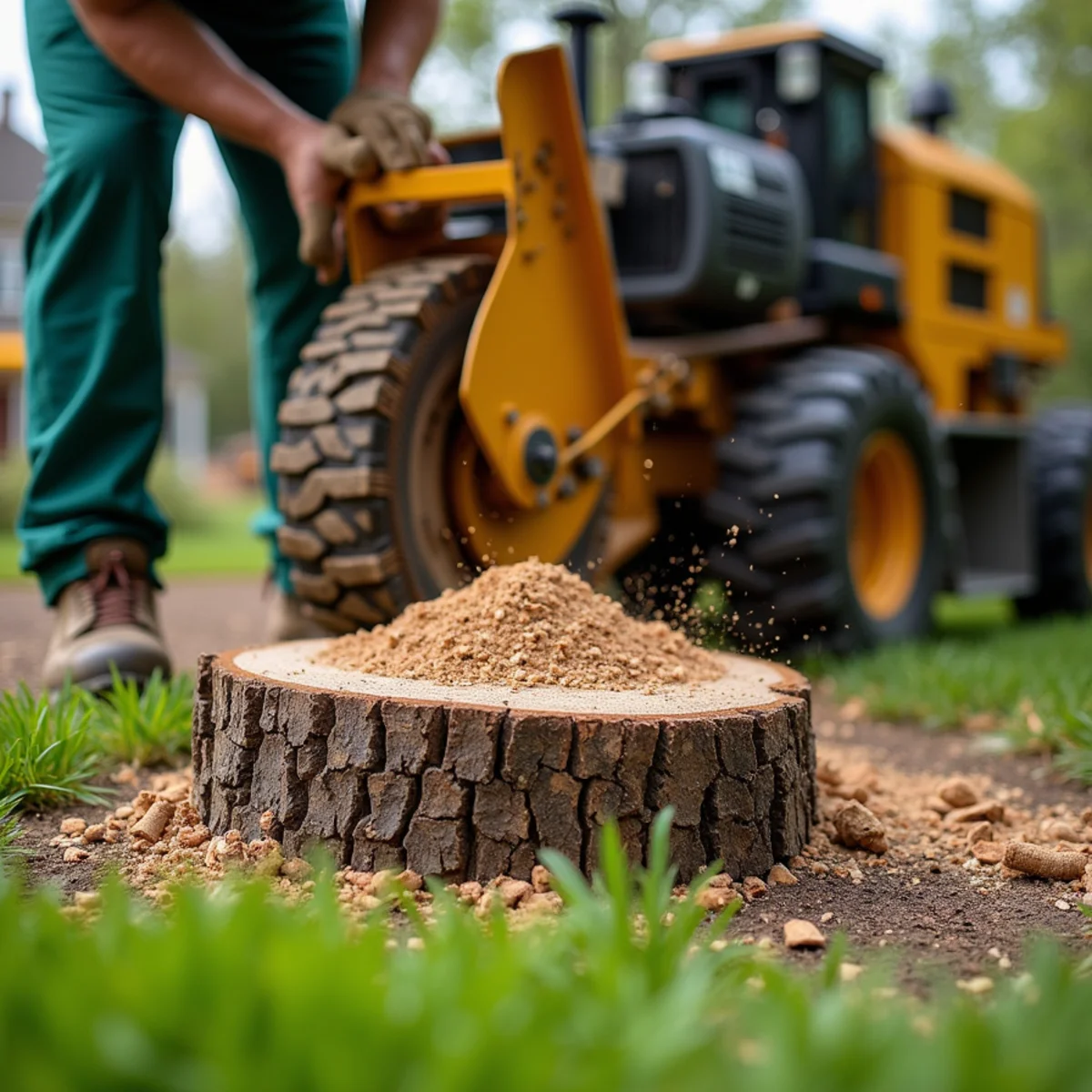
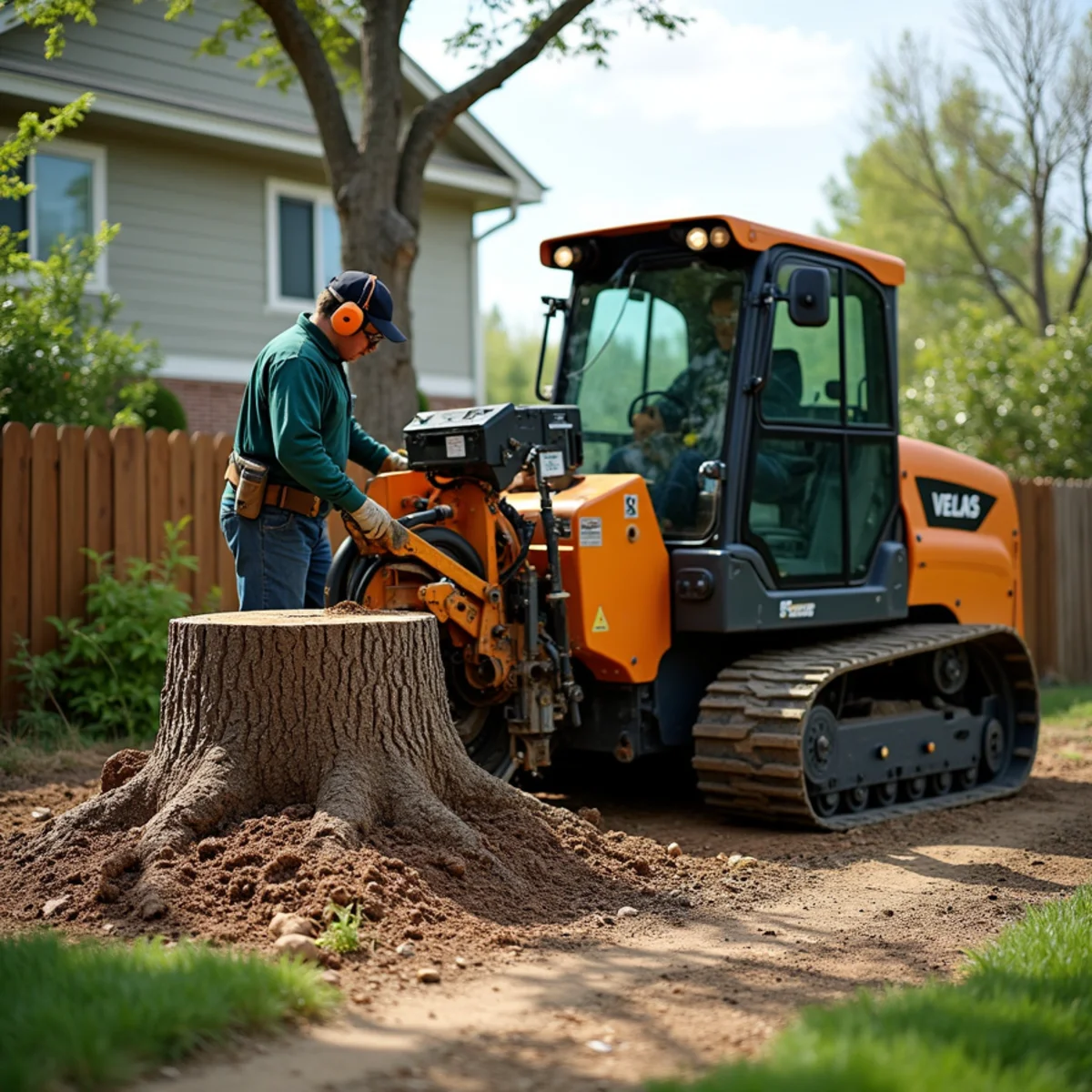
Stump Grinding planned for the actual property
Stump work starts with the end use. If the area will become lawn, planting bed, rock, or a future hardscape, the needed grinding depth and cleanup can differ. We look at stump diameter, root flare, surrounding irrigation, fences, utilities, grade, and machine access. Surface roots may extend well beyond the trunk, especially on mature trees, so it is important to identify which roots are within the practical scope rather than assuming every underground root will disappear.
Grinding is different from full root-system excavation. The machine chips the stump and selected flare below the surface, leaving a mixture of soil and wood chips. The deeper roots remain in the ground and decay over time. This is usually less disruptive than digging out the entire root mass. It also means the final area can settle as organic material decomposes, a useful point to consider when planning new sod, a bed, or construction near the old tree location.
The supplied reviews mention successful grinding after silver maple, ash, and other tree removals. They also show why stump scope should be discussed before removal day. Some customers intentionally keep a portion of trunk; others want the space cleared. We treat grinding as a defined service with clear expectations for depth, exposed roots, chip handling, and any soil or finish work that remains after the machine is done.
Before work, private utility and irrigation locations need consideration. Marked public utilities do not necessarily identify privately installed sprinkler lines, low-voltage lighting, or other landscape features. Sharing what you know about the yard helps prevent avoidable surprises. Once grinding is complete, chips can be handled according to the estimate. The result is a safer, more flexible area ready for the next step in your landscape plan.