
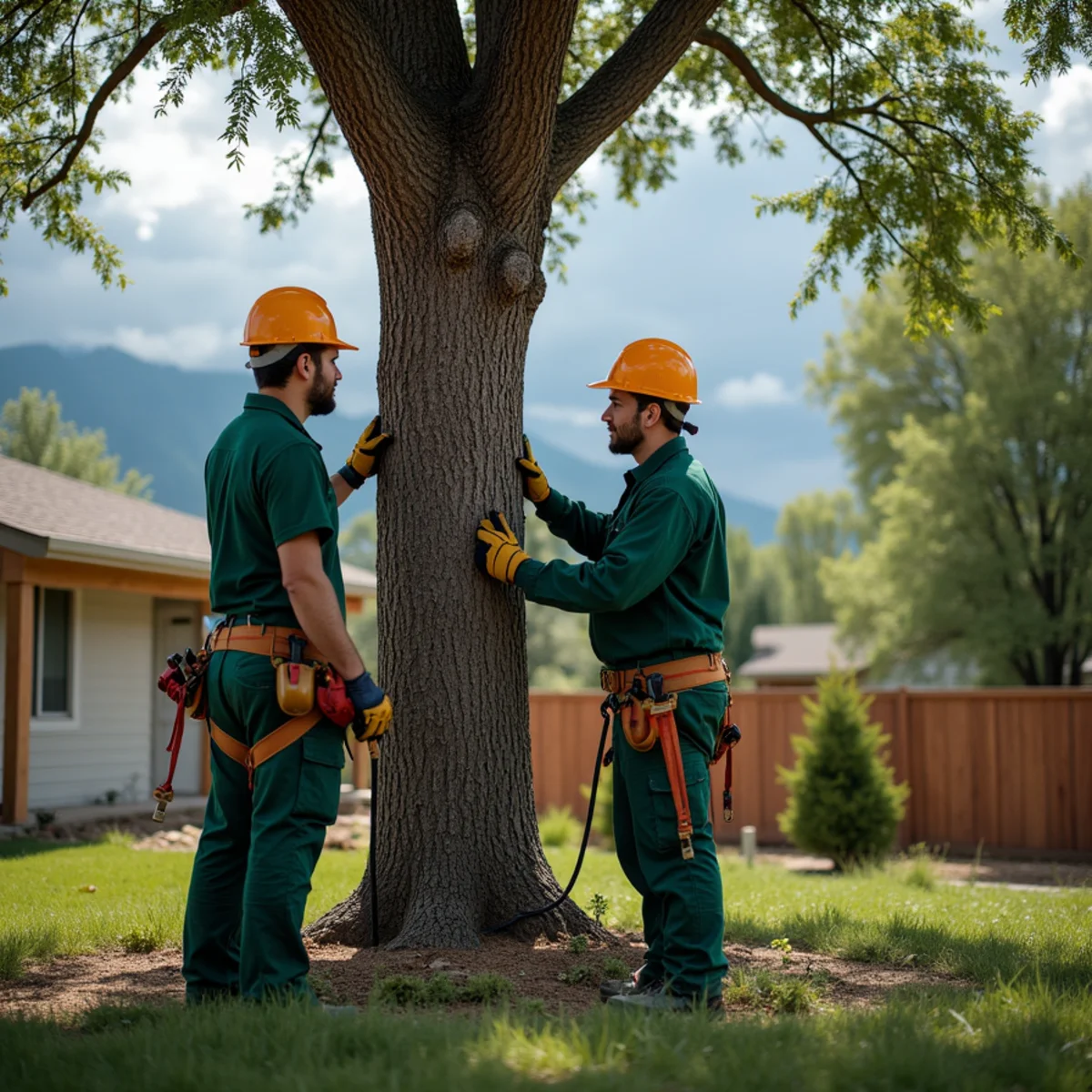
No pruning service can make a living tree storm-proof. Colorado wind, hail, and heavy wet snow can break sound branches as well as weak ones. Preparation is still worthwhile because known defects, poor structure, and neglected deadwood increase avoidable risk. The goal is to identify what can be corrected before weather arrives and to know what not to do when damage happens.
Start with targets, not with the tree
Walk beneath the canopy and note bedrooms, play areas, patios, driveways, sidewalks, parked vehicles, sheds, and utility routes. A defect over an occupied area deserves a higher priority than the same defect over open ground.
Move portable items when a severe forecast approaches, but do not work beneath suspicious branches. The inspection should happen during calm weather with good visibility, not while the crown is already moving hard in wind.
Look for structural warning signs
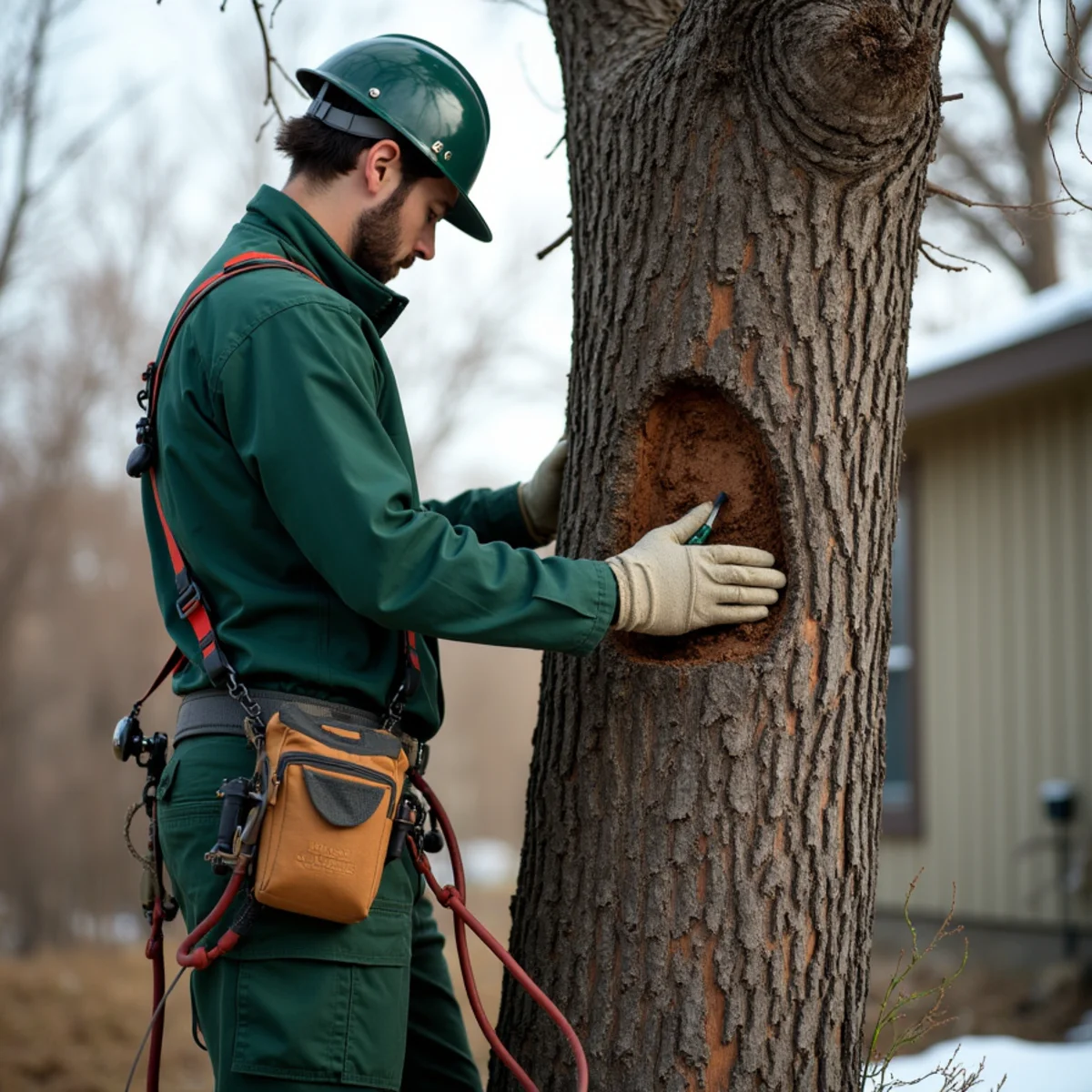
Large dead limbs, fresh cracks, open splits, hanging branches, cavities at major unions, and root-zone lifting deserve attention. Also note long end-heavy limbs and multiple upright leaders joined at narrow angles. Those features do not guarantee failure, but they guide a professional assessment.
Compare the tree with older photos if possible. A suddenly increased lean, new soil crack, or changed canopy position is more concerning than a long-standing stable form.
Prune for defects, not for wind to pass through
The common idea that every canopy should be heavily thinned so wind can pass through can lead to over-pruning. Trees need foliage and distributed branches. Removing too much interior growth can leave long bare limbs with weight concentrated at the ends.
A better plan removes dead, broken, rubbing, or structurally weak material and reduces selected overextended limbs when appropriate. Cuts should follow branch structure rather than creating stubs or topping the tree.
Support roots before weather stress
Healthy roots depend on usable soil moisture, oxygen, and protection from construction damage. During dry periods, deep watering may help established trees, especially when turf irrigation does not reach the broader root zone. Avoid frequent shallow saturation at the trunk.
Keep mulch in a broad, modest layer and pull it back from the trunk. Do not pile soil, rock, or mulch over the root flare. Root cutting for new hardscape or utilities can change stability long after the construction crew leaves.
Have a safe post-storm plan
After a storm, keep people and pets away from hanging limbs, leaning trees, and broken branches under tension. Never touch tree material near power lines. Photograph damage from a safe location before cleanup if an insurance claim may be involved.
Call for an assessment that separates immediate hazards from repairable damage. Some trees can be pruned and retained; others suffer trunk splits, root failure, or crown loss that makes removal more reasonable. Avoid door-to-door pressure while the neighborhood is still recovering.
Document a baseline before storm season
Take clear ground-level photos of important trees from the same directions each season. Include the trunk base, full crown, major unions, and nearby targets. A baseline makes it easier to notice a changed lean, fresh gap, broken leader, or lifted soil after severe weather. It can also help explain property conditions to an estimator who did not see the tree before the storm.
Keep basic access information with the photos: gate width, utility involvement, roof or fence conflicts, and whether the tree is on a property line. Good preparation shortens the first conversation and helps the crew understand the scene without encouraging anyone to enter an unsafe area for a closer picture.
Use a before, during, and after-storm decision sequence
Before the forecast arrives, prioritize trees by target and observable defect: occupied rooms, walks, parking, play areas, and utility routes deserve attention before open ground. A pre-storm scope should remove or reduce specific defects, not strip healthy interior growth in the hope of making a tree windproof. Record gate width, overhead conflicts, private lines, and material staging so a later response does not begin with avoidable access questions.
During wet snow, do not stand under loaded, cracked, or hanging limbs. Aurora advises inspecting the tree and surroundings before touching snow and using gentle upward movement only on reachable branches that are not already severely bent or broken. Downed conductors, branches near utilities, overhead cutting, twisted wood, and ladder/chainsaw work are stop points—not homeowner cleanup tasks.
After conditions settle, separate immediate clearance from the tree's longer-term decision. Note the retained leader, major limbs, live crown, fresh cracks, root-zone movement, and remaining targets before balancing the silhouette. Aurora distinguishes City and private tree responsibilities and does not collect private tree debris, so document ownership and keep hauling scope explicit. Recovery pruning, removal, stump work, and landscape repair can then be priced as distinct outcomes instead of one rushed storm-cleanup label.
Authoritative Aurora references
What to do next
Storm readiness is mostly disciplined maintenance: inspect, prioritize targets, correct known defects, support roots, and plan a safe response. If you see deadwood, cracks, or an overextended limb before the next Aurora forecast changes, MQ can review the tree and prepare a focused scope.