
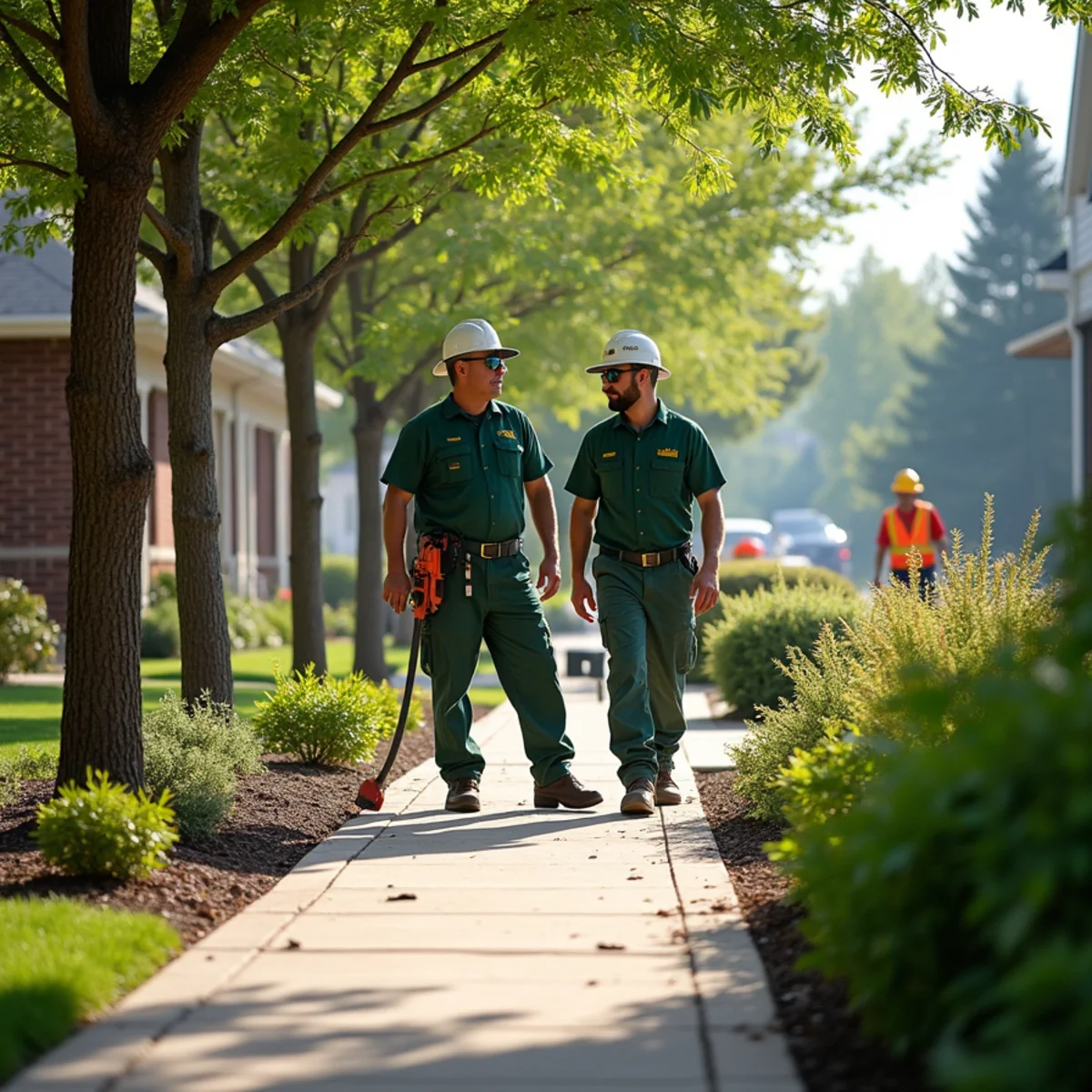
Commercial outdoor care succeeds when responsibilities and standards are visible. “Keep it looking good” is too vague for a property manager, vendor, tenant, or owner to evaluate. A useful maintenance plan divides the site into zones, identifies safety and access requirements, sets presentation priorities, and establishes how larger tree or irrigation repairs will be approved.
Map people, vehicles, and operating constraints
Mark entries, sidewalks, accessible routes, loading areas, fire access, signs, lighting, parking, play spaces, and service gates. Note times when customer or tenant traffic is highest.
Tree branches, shrubs, irrigation overspray, and debris can interfere with those routes. The work plan should describe staging and how areas will remain protected during service.

Separate safety from appearance
Dead branches over walks, blocked sightlines, unstable trees, and irrigation creating slippery surfaces belong in a safety priority. Faded mulch, uneven shrub shape, and seasonal color belong in presentation.
Separating categories supports faster approvals. A property can address high-consequence work immediately while scheduling appearance upgrades within the normal budget cycle.
Define standards by zone
Primary entrances may need crisp edges, clean beds, and frequent debris attention. Back-of-house areas may need functional clearance and weed control. Naturalized edges may have a different standard again.
Zone definitions prevent the entire property from receiving the most expensive level of detail. They also help the vendor allocate time where occupants and customers actually see it.
Add tree and irrigation inspection points
Tree work does not always fit a mowing schedule. Plan periodic ground-based checks and post-storm review for deadwood, cracks, clearance, and root movement. Document trees that require staged pruning or future removal.
Run irrigation zones visibly during the season. Track leaks, blocked heads, overspray, and plant-zone mismatch. Repairs should be documented separately from routine scheduling adjustments.
Create an approval and completion process
Identify who can approve routine items, urgent safety work, and larger capital improvements. Written estimates should state zones, materials, hauling, access assumptions, and finish standards.
After service, review completed areas and flag future needs. Photos and concise notes can help off-site owners understand why a tree, irrigation, or hardscape item is being recommended.
Build the annual budget from observed assets
Create a simple inventory of significant trees, irrigation zones, high-visibility beds, hardscape concerns, and recurring cleanup areas. The list does not need to be a complex software system. It should show which items are routine, which are aging, and which could create a high consequence if deferred.
Use that inventory to reserve funds for predictable tree pruning, irrigation repairs, and periodic resets instead of placing every non-weekly item into an emergency category. When a manager changes, the property history remains available and the next vendor can understand prior decisions.
Review the inventory after major storms, construction, tenant changes, and landscape renovations. Those events can change access, targets, irrigation coverage, and presentation needs faster than the normal calendar. Updating the plan keeps routine crews from working from assumptions that no longer match the site.
Convert expectations into a service and evidence matrix
For each property zone, define the asset, task, normal frequency or condition trigger, completion standard, evidence, and approval authority. An entry plaza might require clear accessible routes, controlled shrub sightlines, functioning irrigation, clean hardscape edges, and same-visit debris removal. A low-visibility perimeter may use a different standard. This matrix prevents keep it looking good from turning into conflicting instructions across owner, manager, tenant, and crew.
Separate routine work, corrective work, and capital work. Routine visits follow the approved service level. Corrective items—such as a broken head, hanging limb, failed shrub, settlement, or blocked sign—receive a documented observation, target/consequence, temporary control if needed, and written recommendation. Capital items such as tree removal, irrigation renovation, major grading, or hardscape repair receive their own scope, access plan, permit/authority check, budget approval, and completion acceptance.
Keep compliance responsibility explicit. Aurora publishes vegetation clearance, unsafe-tree, erosion, and lawn/irrigation requirements, but a maintenance vendor should not silently become the owner's code interpreter. Name who verifies current rules, permits, ownership, utility coordination, and notice deadlines. Close each cycle with dated notes or photos, work completed, exceptions, water-use or leak observations, and next priorities. That record supports forecasting and makes a vendor change less disruptive because the property history remains with the owner.
Authoritative Aurora references
What to do next
A commercial landscape plan is a communication tool as much as a maintenance schedule. It defines priorities, standards, approvals, and evidence. MQ serves businesses as well as homeowners and can coordinate tree, landscape, irrigation, and cleanup scopes for Aurora properties.