
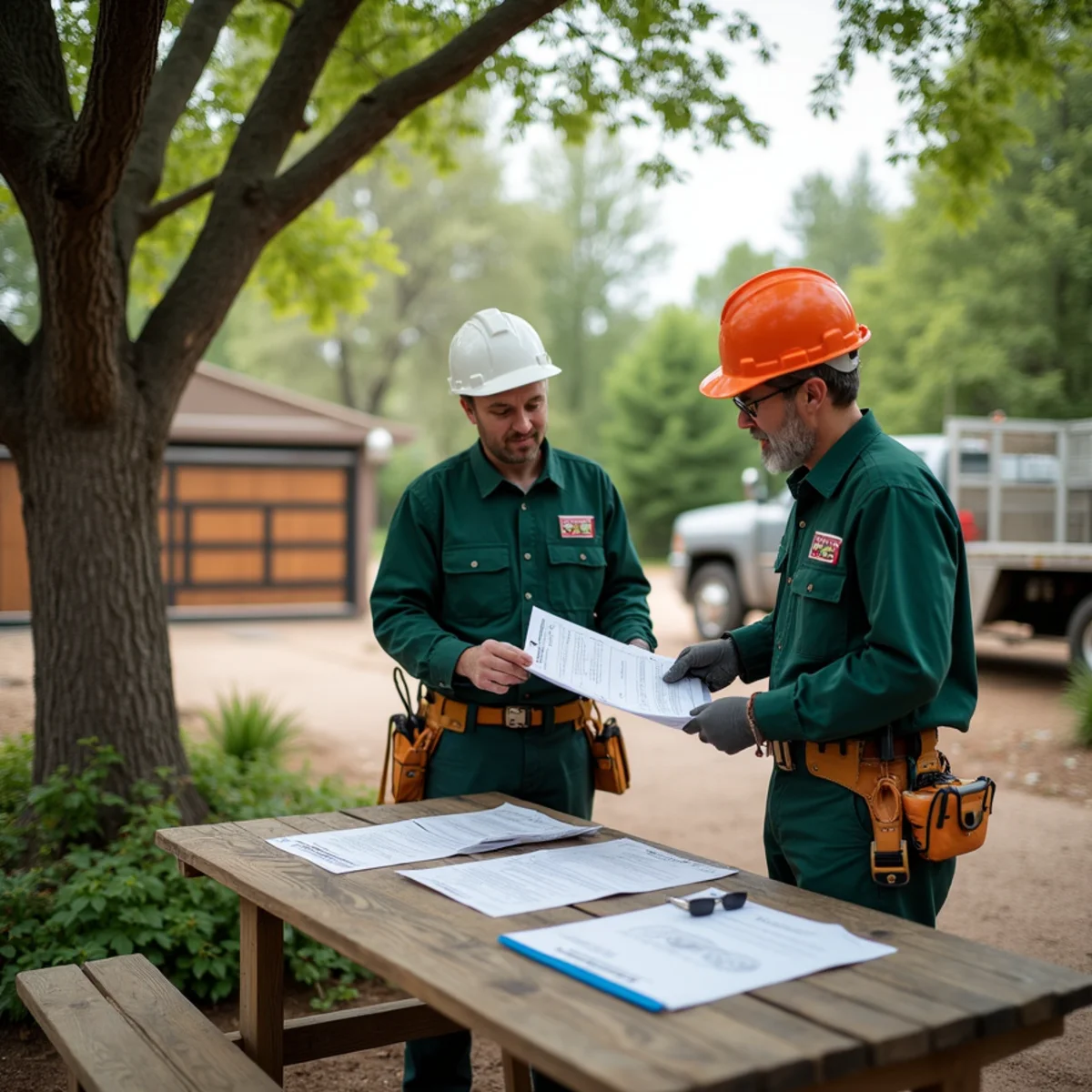
Three tree-service estimates can describe three different jobs even when every contractor looked at the same tree. One may include hauling and grinding; another may leave wood and a stump. One may plan controlled rigging around a roof; another may assume open drop space. Price comparison becomes useful only after the scope is normalized.
Confirm the exact tree and objective
The estimate should identify which trees or branches are included and whether the objective is removal, deadwood, clearance, reduction, structural pruning, or storm cleanup. “Trim trees” is too vague for a multi-tree yard.
Walk the site and repeat the intended outcome. A contractor may see a safety concern you did not notice or may propose removing more live crown than you expect. Resolve that difference before price drives the decision.
Compare access and work method assumptions
Ask how the crew plans to reach the tree and move material. Gate width, slopes, roofs, fences, utilities, landscaping, parked vehicles, and neighbors can change the sequence.
You do not need to dictate technical methods, but the estimate should show that the contractor recognized the site constraints. An open-access assumption on a no-access backyard is not a bargain.
Make cleanup explicit
Clarify chipping, hauling, trunk wood, raking, and where any kept material will go. Large logs left by a driveway may be acceptable to one owner and an expensive surprise to another.
For storm scenes, identify whether the quote covers only fallen material or also the damaged standing tree. For pruning, clarify whether all cut branches leave the property.
Separate stump and landscape finish
Tree removal does not automatically include stump grinding. If grinding is quoted, ask about depth, surface roots, chips, and final grade. Lawn or bed restoration may be separate again.
A low estimate that omits the next two phases may produce a higher total project cost. Compare the full outcome you actually want.
Evaluate communication and evidence
Responsiveness, arrival, written detail, and willingness to explain tradeoffs are part of the service. Supplied MQ reviews repeatedly mention punctual estimates, fair pricing, careful work, and strong cleanup.
Avoid pressure to authorize immediately because a crew is “already in the area.” For significant work, take time to understand the scope, check current business documentation directly, and keep the written estimate.
Compare what happens when the plan changes
Weather, concealed decay, inaccessible equipment, and unexpected private lines can alter a project. Ask how the contractor communicates a material scope change and who can authorize it. A clear process protects the owner from surprise charges and protects the crew from being expected to perform unpriced work.
Also ask what happens if the owner changes the scope after arrival—for example, adding a neighboring tree or deciding to keep wood. Written change approval can be simple, but it should occur before the extra work is completed. Professional communication is part of value, not administrative clutter.
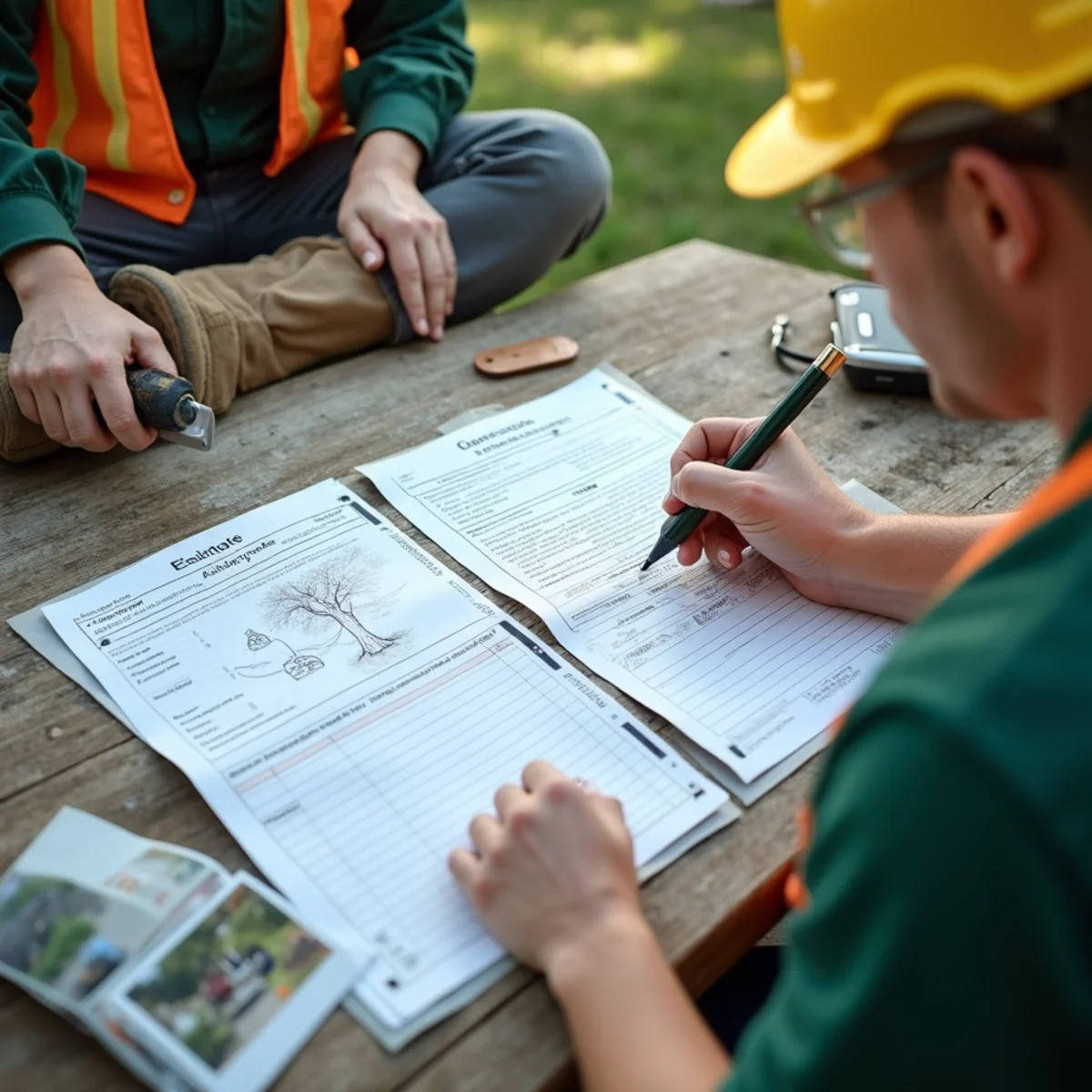
Build one comparison sheet before choosing a proposal
Give each estimate the same eight headings. First: the exact tree or trees, with enough location detail that crews cannot confuse them. Second: the objective and work method—removal, deadwood, measured clearance, structural pruning, or reduction—with cut or branch limits where pruning is proposed. Third: ownership and authority, including City tree, private tree, neighbor boundary, HOA, site plan, utility, or permit responsibility. Resolve these before price comparison.
Fourth: access and protection, including gates, equipment/staging, roofs, fences, pavement, irrigation, private lines, vehicles, occupants, and who moves obstacles. Fifth: material and finish—brush, trunk wood, firewood size, hauling, chips, raking, stump area/depth, surface roots, backfill, grade, lawn, irrigation, or planting. Sixth: schedule and constraints, including weather, arrival window, owner access, and whether urgent clearance is distinct from later restoration.
Seventh: current business documents and commercial terms. Verify relevant licensing or authorization directly with the issuing source where the work requires it; request current documentation rather than relying on a badge or copied claim. Compare total price, deposit, payment milestone, cancellation, expiration, and exclusions. Eighth: change and acceptance—what concealed condition or owner request can change price, who approves it before work proceeds, how completion is documented, and when the final walkthrough occurs. A lower total is meaningful only after these eight columns describe the same outcome.
Authoritative Aurora references
What to do next
A good estimate lets you picture the work from arrival through cleanup. Compare objectives, access, protection, debris, stump, finish, and communication. MQ’s supplied reviews provide repeated evidence of thorough scope, careful execution, and clean results; request a site-specific written estimate for your Aurora-area project.