
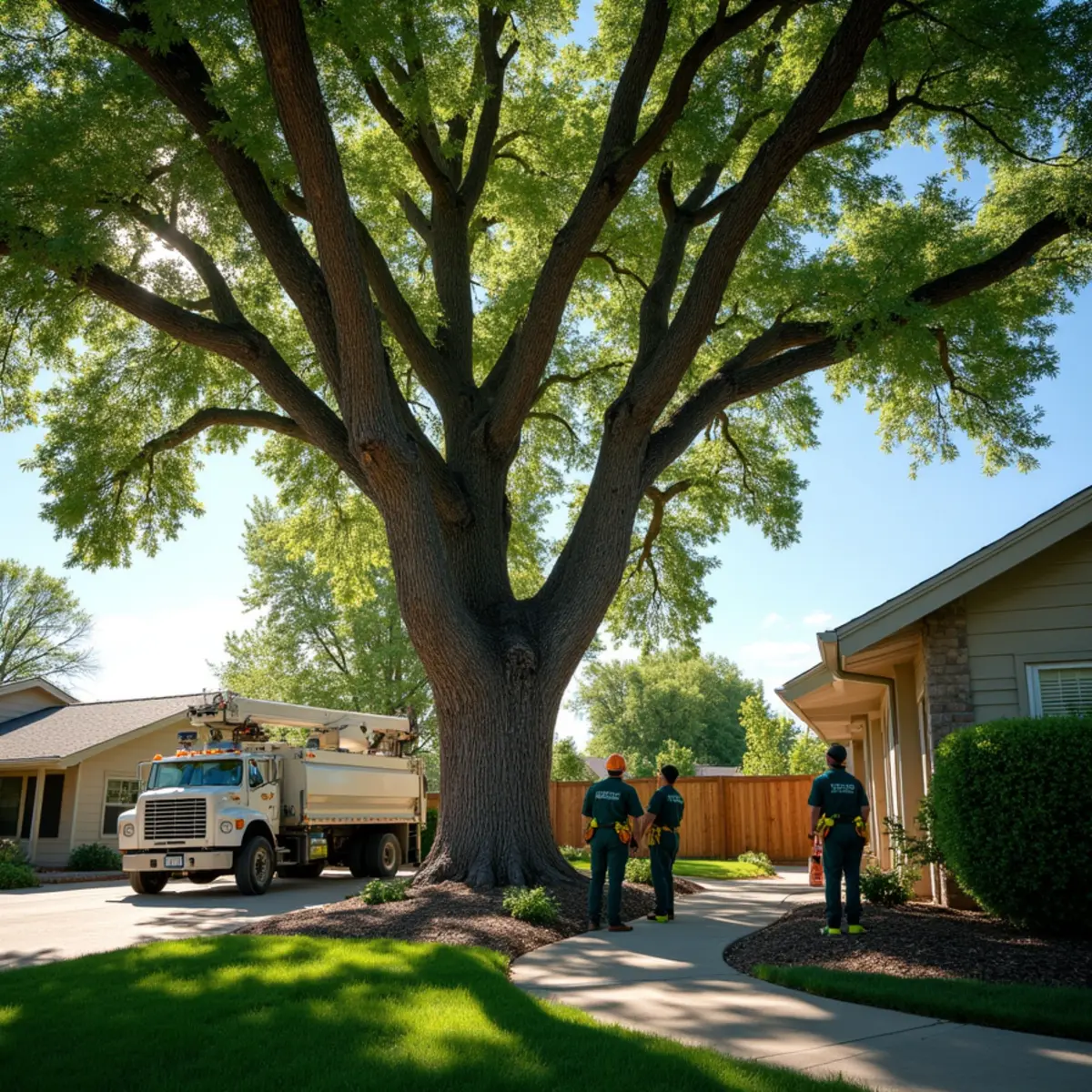
Cottonwoods are fast-growing, large, and closely tied to Colorado waterways and planted landscapes. In Aurora yards, they can provide exceptional shade while producing heavy limbs, abundant debris, surface roots, and difficult conflicts with homes or neighboring property. Good care begins by respecting both their value and their scale.
Inspect large branches by target
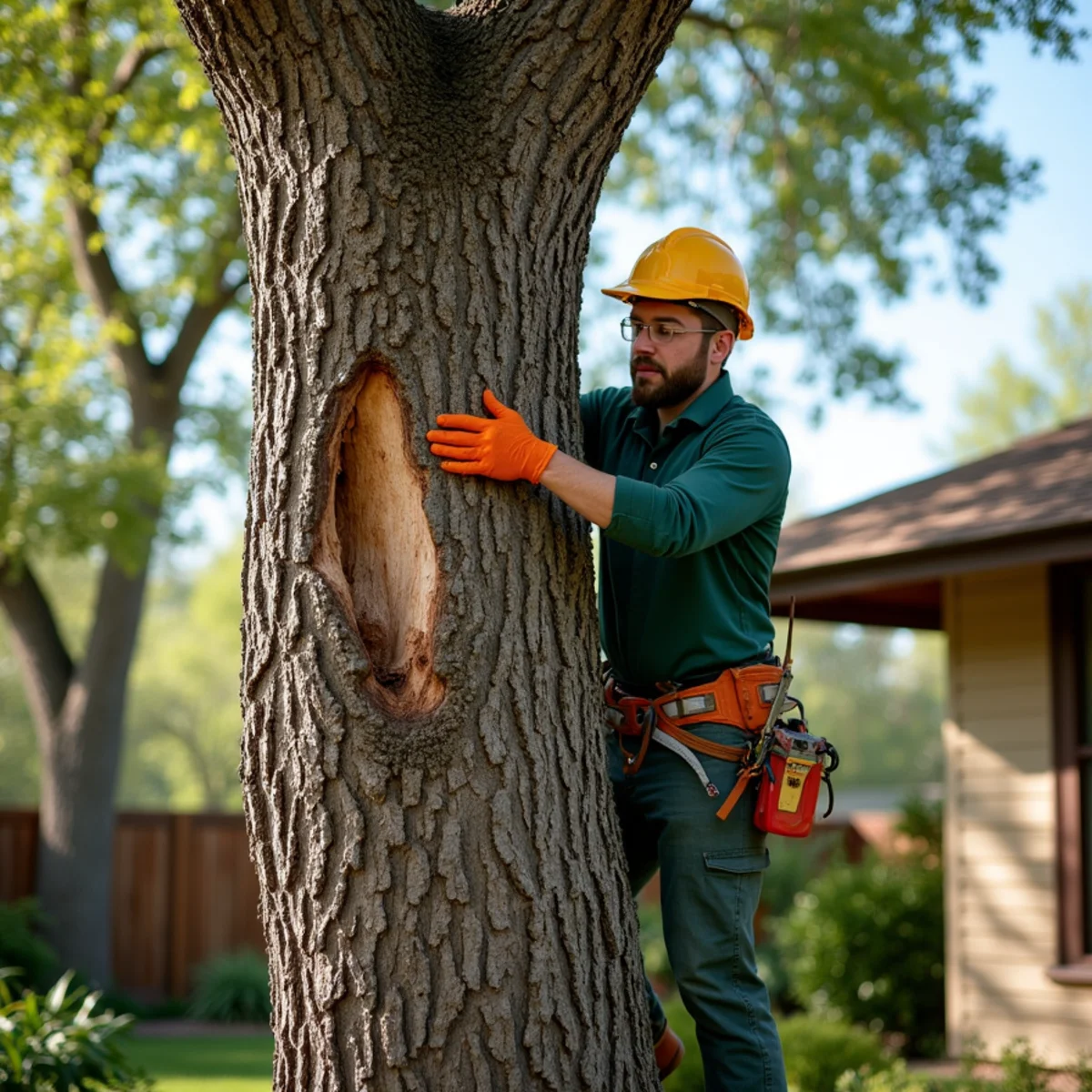
Deadwood high in a cottonwood can be hard to see until leaves are out. Look for bare limbs, broken stubs, cavities, cracks at unions, and branch ends that have died back. Then consider what lies beneath each concern.
A supplied MQ review describes dangerous dead cottonwood limbs over a home. That is a higher priority than comparable deadwood over open ground. Size and consequence guide the sequence.
Avoid aggressive topping
Topping large cottonwoods creates major wounds and clusters of fast regrowth that can be weakly attached. It also removes a large share of the canopy the tree uses for energy and shade.
If a limb is overextended, reduction to a suitable lateral may be considered. If the whole tree has outgrown the space or carries defects that pruning cannot reasonably manage, removal may be more honest than repeated heavy cutting.
Understand water and roots
Cottonwoods are associated with moisture, but yard conditions vary. Turf irrigation may wet only shallow soil, while leaks or drainage changes can saturate roots. Surface roots can lift lawn and complicate hardscape.
Do not cut major roots simply to flatten a path or install edging. Root damage can affect health and stability. Shift the design or request a site-specific plan before excavation.
Plan for snow, wind, and repeated failure
Long limbs and broad crowns can collect heavy wet snow. Structural defects and deadwood increase the chance of breakage, but even sound branches can fail in extreme weather.
After a break, evaluate the remaining tree. A lost limb can change load distribution and expose new decay. Cleanup is only the first step when the failure alters the crown or trunk.
Know when removal becomes reasonable
Severe trunk decay, root failure, repeated large-limb loss, extensive dead crown, or an unmanageable conflict with high-value targets can make removal appropriate. The decision should include access and stump plans.
Because cottonwoods produce a large amount of wood, debris handling is a significant part of the scope. Clarify hauling, firewood, chips, and grinding before work begins.
Plan access before the cottonwood becomes an emergency
Large cottonwoods produce heavy wood and broad brush. If the only gate is narrow, the yard is crossed by irrigation, or recent landscaping blocks equipment, removal and major pruning may require substantial manual handling. Discussing access while the tree is stable gives the owner more scheduling and method options than a storm scene does.
Keep parking and gate routes clear on service day, identify private lines, and decide where any retained wood can go. These logistical choices do not determine tree health, but they strongly influence how efficiently a large-tree project can move without disturbing the rest of the property.
Choose among retention, measured management, and removal
Retention is not the same as doing nothing. For a mature cottonwood with useful shade and no urgent defect, document the trunk base, major unions, deadwood, prior cuts, target areas, and changes after wind or wet snow. Protect its broad root environment from avoidable trenching, compaction, grade change, and irrigation disruption. That record gives future pruning decisions a baseline instead of treating every large branch as a new surprise.
Measured management starts with a named objective: deadwood cleaning, a specific clearance conflict, correction of selected weak attachments where feasible, or reduction of an overextended part back to a suitable union. CSU notes that codominant trunks are a major source of Colorado storm damage and that mature trees tolerate pruning less readily than young trees. The answer is not to strip the interior or remove every watersprout; preserve functional live crown and stage work when one visit would demand too much removal.
Removal becomes a planning decision when condition, repeated failure, target exposure, site constraints, and realistic pruning options no longer support retention. For a large cottonwood, compare the controlled movement of heavy wood, gate and equipment access, roofs/fences/utilities, private lines, material hauling, stump flare, chips, grade, irrigation, and the next landscape use. Pricing the whole sequence early is more useful than waiting for a storm scene to decide what the word cleanup includes.
Authoritative Aurora references
What to do next
A mature cottonwood deserves a clear-eyed plan: preserve useful canopy, remove known high-consequence defects, protect roots, and recognize when repeated intervention no longer produces a reasonable risk level. MQ can assess pruning, cleanup, or removal scope for Aurora cottonwoods.