
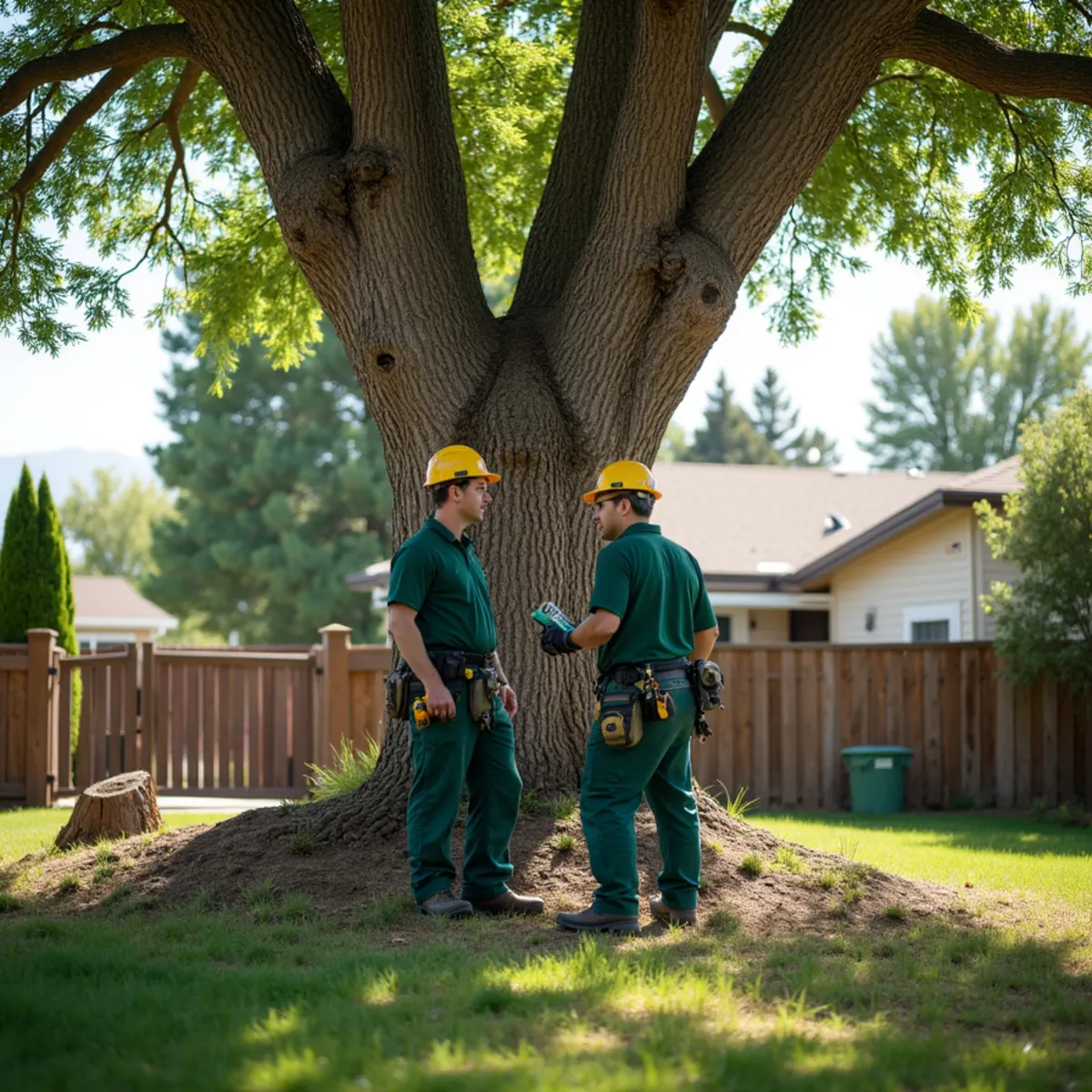
Tree removal prices vary because tree-removal jobs vary. A straight, sound tree with open access is not the same project as a dead cottonwood leaning over a house behind a narrow gate. The useful question is not “What does a tree cost?” but “What work is required to remove this tree safely and leave the property in the agreed condition?” This guide explains the factors an Aurora property owner should expect to see in a thoughtful estimate.
Tree size is more than height
Height matters, but trunk diameter, canopy spread, wood density, branch architecture, and total material volume can matter just as much. A shorter tree with several broad stems may produce more heavy wood than a taller narrow tree. Species also changes how brittle or dense the material is and how the crew can rig it.
Ask an estimator to explain which size features affect the plan. A good explanation may mention the amount of canopy over targets, the diameter of trunk sections, or how many loads of brush and wood the site will produce. That is more informative than a price based only on a rough height guess.
Condition changes how a tree can be worked
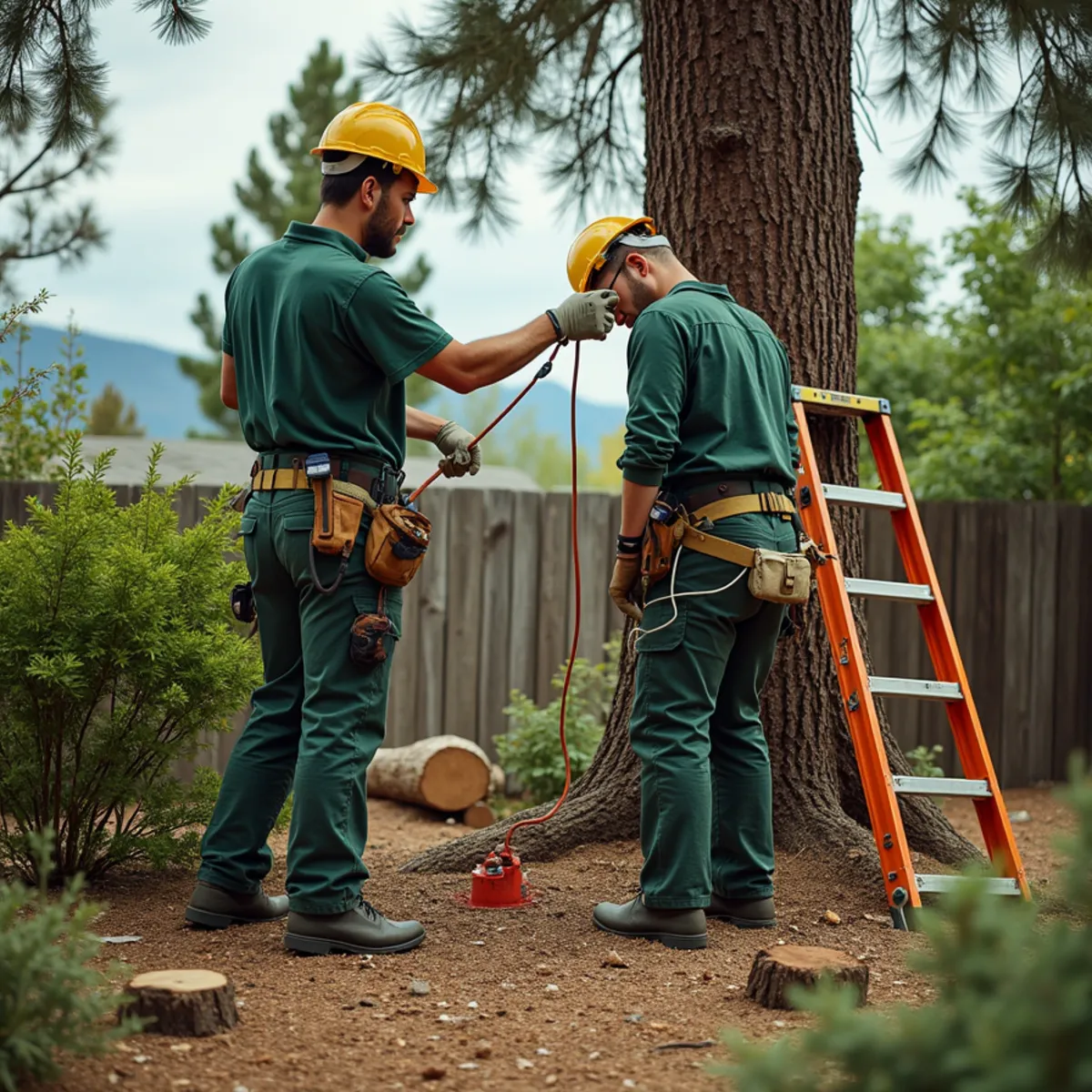
A living tree with sound attachments may support ordinary climbing and rigging methods. A dead, hollow, split, or storm-damaged tree may not. Brittle limbs can break before they are cut; decayed trunks can limit anchor points; exposed roots can show that the whole tree has shifted.
This does not mean every dead tree automatically costs more. It means condition changes options. The estimate should reflect any extra control, equipment, or sequencing required by the defects that are visible during the site visit.
Access and targets often drive complexity
Open landing space can simplify material handling. Aurora backyards frequently have fences, sheds, roofs, landscaping, play equipment, utilities, and neighboring property beneath the canopy. Every protected target reduces where a branch can move. Narrow gates and long carries also affect how quickly wood and brush reach the truck.
Supplied MQ reviews describe removals between houses, work over sheds and fences, and a tree close to an electrical box. Those projects show why two similar trees can produce different estimates. The second tree may demand smaller pieces, more rope control, and more ground handling.
Cleanup and stump work must be defined
A removal quote is incomplete if it does not explain the material afterward. Will branches be chipped and hauled? Is trunk wood removed? Is raking included? Does the owner want to keep firewood or chips? These decisions affect labor, trucking, disposal, and the final appearance.
Stump grinding is usually a separate line because the desired depth and finish vary. Grinding the visible stump and surface flare is different from removing distant roots or preparing a construction-ready hole. Clarify chip handling and whether soil or lawn restoration is included.
How to compare estimates fairly
Compare scope before price. Confirm the exact tree, pruning or removal objective, access assumptions, property protection, hauling, stump decision, and finish. One estimate may look lower because it leaves wood, omits the stump, or assumes open access that does not exist.
Written detail also protects the conversation. If a contractor recommends a different method, ask why. The best value is the proposal that solves the actual risk and leaves no major responsibility hidden in vague language.
A useful estimate documents uncertainty too
Some conditions cannot be confirmed from the ground. Dense foliage can hide attachments, soil can cover root flare, and decay may extend farther than an opening suggests. A careful estimator should identify those limits instead of pretending every variable is known. The scope can explain what would trigger a change, who approves it, and how communication happens before extra work proceeds.
This matters most on dead, storm-damaged, or technically placed trees. Clear assumptions do not make the estimate weak; they make it honest. Owners can compare contractors more fairly when each proposal distinguishes visible conditions from possible concealed complications.
Confirm ownership before comparing the finished result
Before pricing private tree removal, confirm who owns the tree and who can authorize the work. Aurora distinguishes City-owned trees from private trees, including trees that may stand near a sidewalk or public right-of-way. Residents cannot remove a City-owned tree themselves. Private-tree removal is generally allowed, but an HOA or a registered site plan may add review, mitigation, or replacement requirements. Resolve that boundary before treating any proposal as ready to approve.
Compare the complete finish rather than the cutting operation alone. The written scope should state what happens to brush and trunk wood, whether stump grinding is included, how chips are handled, and whether grading, soil, lawn, irrigation, or planting repair belongs to this project or a later phase. Aurora notes that City crews do not collect private storm debris, so hauling responsibility should never be left to assumption.
Finally, ask how concealed decay, a blocked access route, an unmarked private line, or a requested scope change would be handled. The estimate can identify known conditions and still explain who approves a material change before extra work begins. That combination—clear assumptions, a defined finish, and written change approval—makes competing bids easier to compare without pretending every tree can be priced from a generic chart.
Authoritative Aurora references
What to do next
A trustworthy Aurora tree-removal estimate is a work plan in price form. It should show that the estimator saw the tree, the targets, the access, and the finish you expect. MQ has served Colorado properties since 2010, and supplied reviews repeatedly mention fair pricing, careful work, and detailed cleanup. Use the tree-service number to arrange a site-specific estimate.