
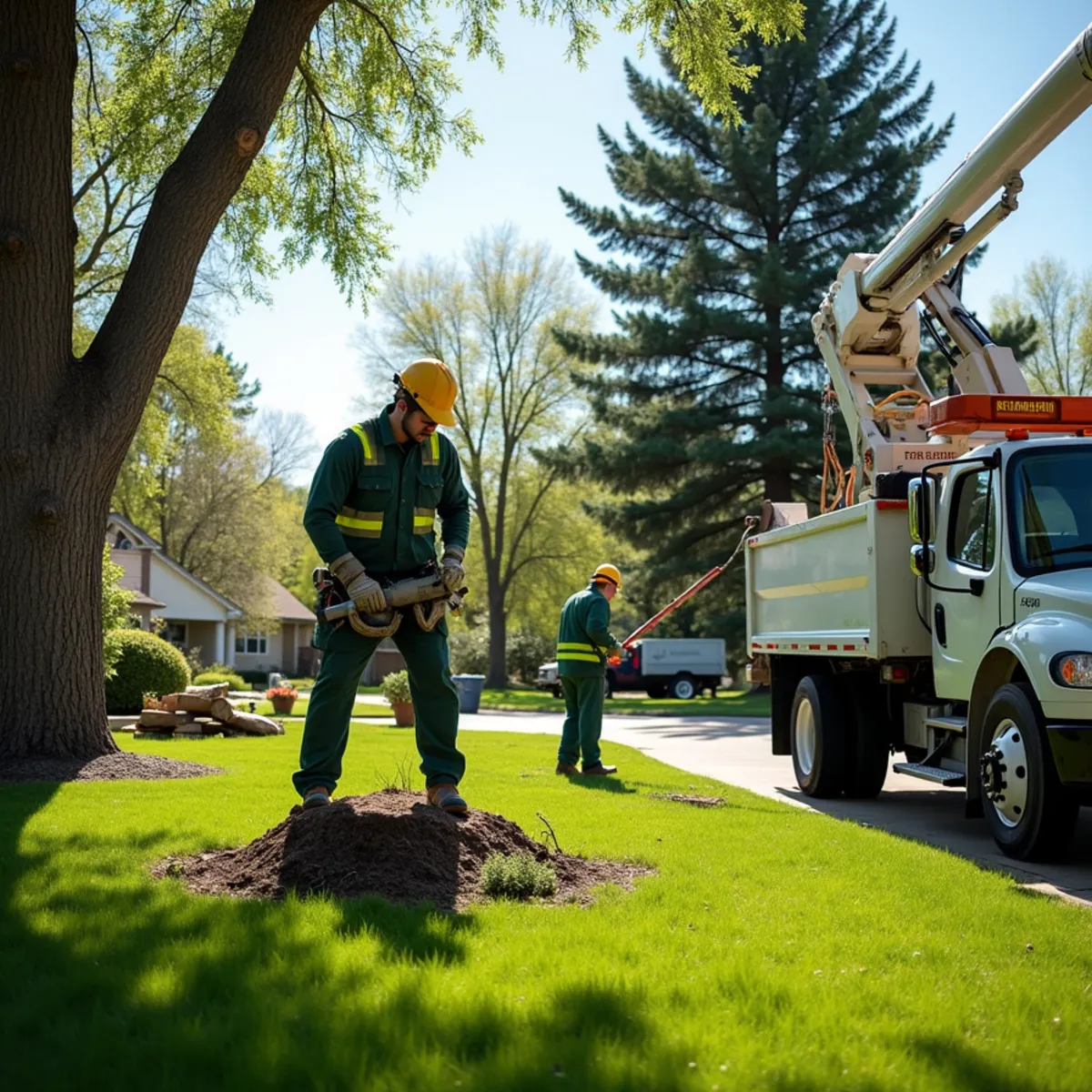
A tree-removal job is not finished in the same way for every owner. One yard needs branches and wood hauled but keeps a low stump. Another needs grinding, chip removal, soil, and lawn restoration. A third is preparing for a bed or patio. Deciding the end use before work starts makes cleanup more efficient and prevents misunderstandings.
Define what happens to branches and wood
Ask whether brush will be chipped and hauled, whether trunk wood remains, and where any kept material will be placed. Large rounds can be difficult for a homeowner to move after the crew leaves.
If firewood is desired, clarify piece size and whether splitting is included. “Leave the wood” can describe very different outcomes.
Choose a stump finish
Leaving a stump may be acceptable in a natural area or when the owner has a specific use. Grinding is usually more practical for lawn, beds, paths, or a clean visible finish.
State grinding depth, root-flare scope, and chip handling. Grinding leaves deeper roots in place and can produce more chips than expected.
Manage chips and settling
Fresh stump chips contain a large volume of air and organic material. Filling the entire depression with chips can look level initially and settle substantially as they decompose.
For lawn restoration, remove excess chips and add suitable soil in compacted lifts without creating a hard pan. Expect some follow-up leveling as remaining roots decay.
Check irrigation and grade
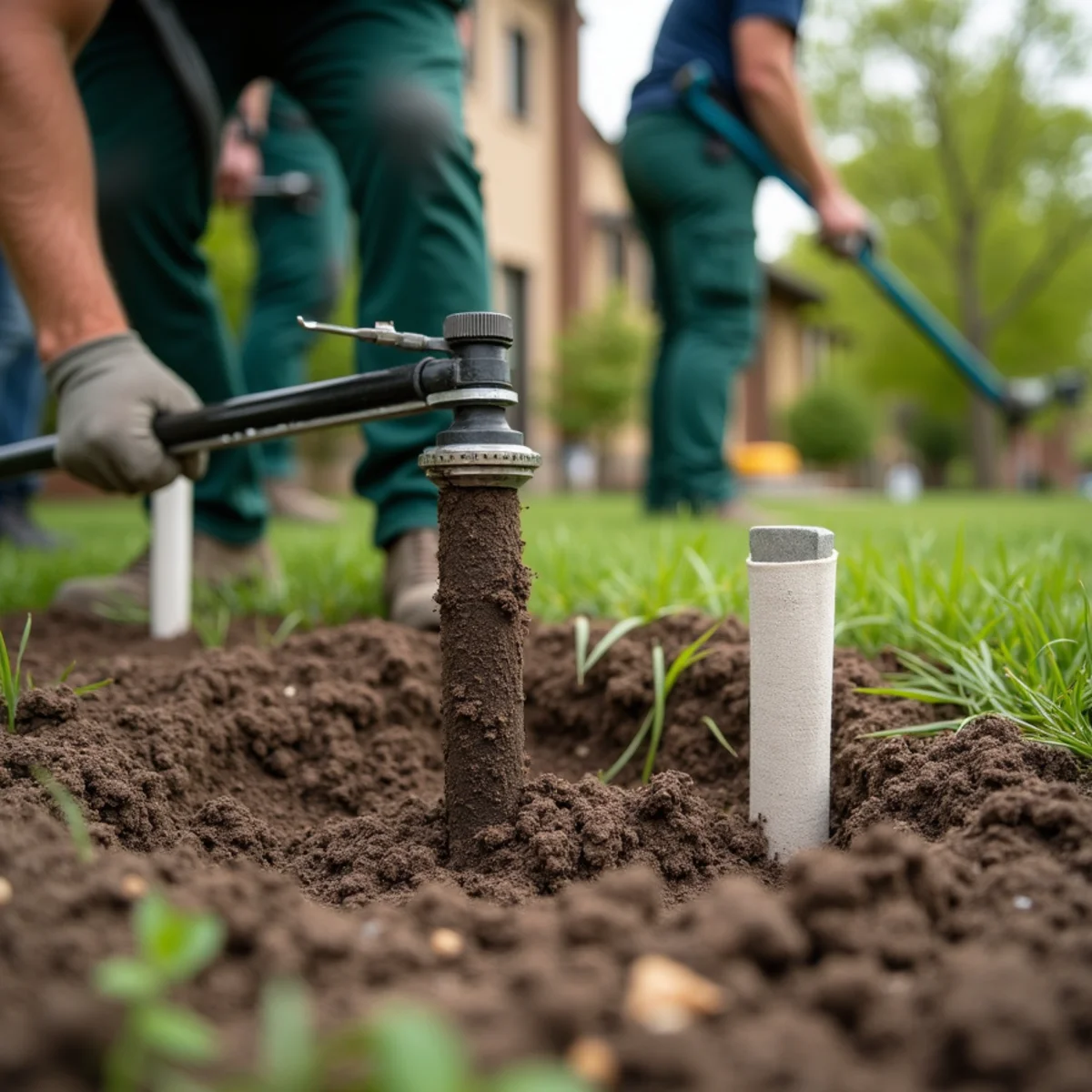
Tree roots may have grown around sprinkler lines, and grinding can expose or damage unknown private irrigation. Test affected zones before final surface work.
Confirm that the new grade drains away from structures and does not create a low spot. A former trunk location may settle differently from surrounding undisturbed soil.
Replant with space for roots and mature size
Planting a new tree directly in the old stump hole is often difficult. Remaining roots, chips, and settling can interfere. An offset location may offer better soil and fewer conflicts.
Choose the new tree by mature size, exposure, water, and distance from structures and utilities. The best replacement does not recreate the reason the old tree had to be removed.
Protect the cleared area from the next construction phase
If a patio, fence, irrigation trench, or landscape installation will follow removal, tell the tree crew before work begins. Wood staging, grinder access, and chip placement can be coordinated with the future work zone. Otherwise, material may be left exactly where the next contractor needs to excavate.
Do not rush to cover the area until grade and underground conflicts are understood. A short pause for settlement and irrigation testing can prevent a new surface from sinking or a new bed from concealing a damaged line. The tree-removal finish should support the next phase rather than merely look tidy for one afternoon.
Take final photos and note where the stump and major roots were located. Once soil and surface materials cover the area, that record helps future irrigation, planting, fence, and hardscape work account for remaining roots and potential settlement without unnecessary exploratory digging.
Close the tree phase with a documented landscape handoff
At completion, identify what left and what remains. Record whether brush, trunk wood, rakings, and excess chips were hauled or retained; where retained material was placed; the approximate stump and root-flare area worked; visible roots that remain; and any exclusions near utilities, irrigation, structures, or access limits. Photograph the finished grade and the stump location before new soil or surface materials erase the reference.
Test the site before covering it. Run nearby irrigation zones, inspect private lines and valve boxes, check drainage direction, remove enough woody residue for the intended lawn or bed finish, and use suitable mineral soil where immediate planting or turf requires it. Expect some settlement where roots and organic material remain, but do not use that expectation to accept an unsafe depression, buried trunk flare on adjacent trees, or water directed toward a foundation.
Have the next use accepted by the person responsible for it. A lawn handoff should state final seed/sod preparation, irrigation, establishment, and settling repair. A planting handoff should account for old roots, prior pest/disease context, light change, and why a nearby location may be better than the exact stump center. A hardscape handoff should be reviewed by its installer because ordinary stump grinding is not proof of structural subgrade. Clear ownership between tree work, soil/grade, irrigation, and final installation prevents one ambiguous cleanup line from hiding four unfinished phases.
Authoritative Aurora references
What to do next
Plan the cleanup backward from the finished yard. Decide on wood, stump, chips, soil, irrigation, grade, and the next use before removal begins. MQ provides both tree and landscaping services, making it easier to coordinate a removal with the landscape reset that follows.