
A hazardous tree is not defined by how frightening it looks. Hazard combines the likelihood of a tree or branch failing with what could be struck. A hollow tree over open ground and a smaller cracked tree over a bedroom create different decisions. Homeowners can watch for important signs, but the signs need context before anyone recommends pruning or removal.
Large dead branches
Deadwood no longer flexes and responds like living tissue. Attachments weaken over time, and branches can fall in calm weather. Size and target matter: a small twig in an unused corner is not the same as a heavy limb above a drive.
Look for missing bark, lack of buds, brittle twigs, fungal growth, and branches that remain bare after the rest of the tree leafs out. Confirm from the ground; do not climb to test them.
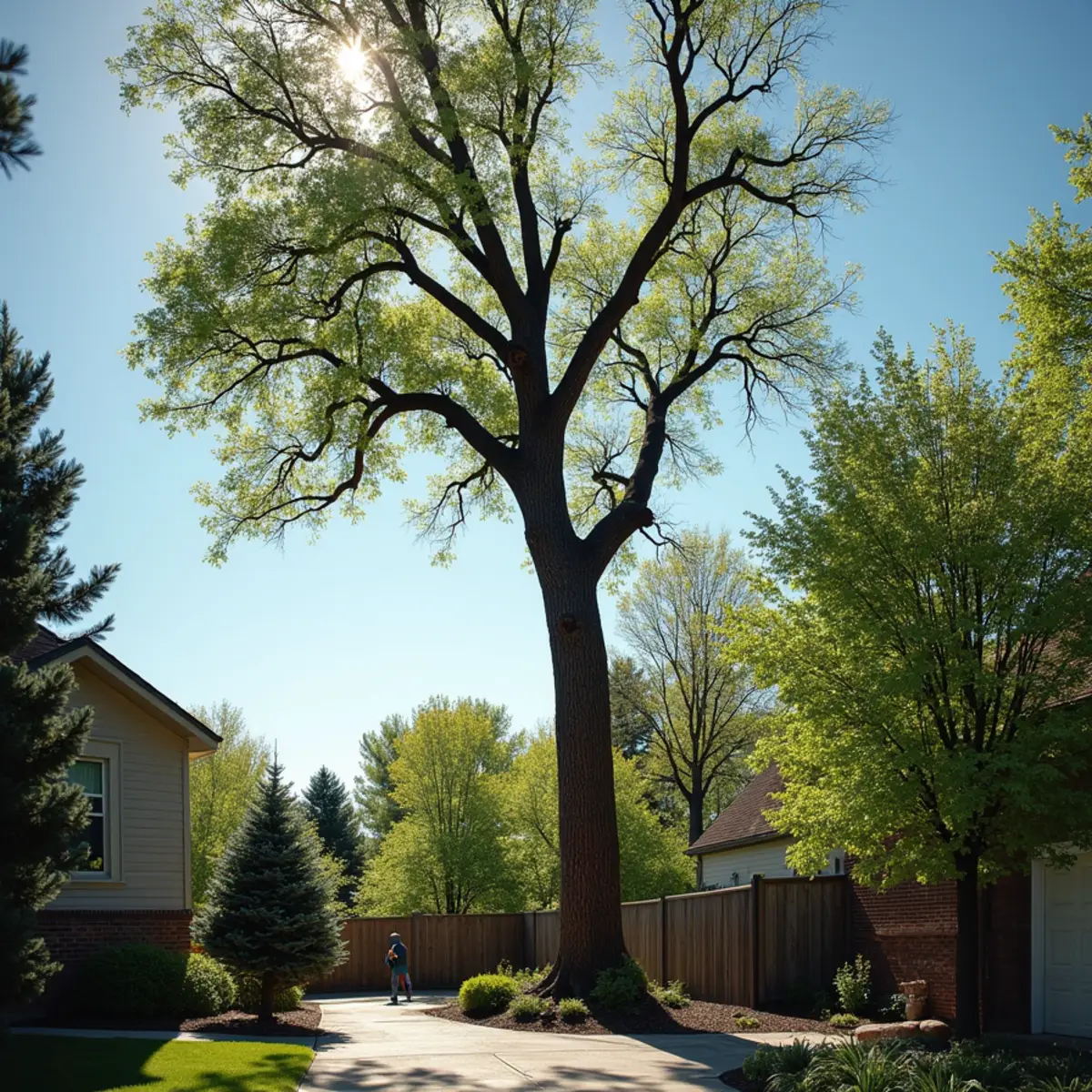
Cracks, splits, and weak unions
Fresh cracks through trunks or major unions deserve prompt attention. Multiple stems joined with included bark can press apart as they gain weight. Old seams may be stable or may hide decay; movement, opening, or recent failure changes the concern.
After wet snow or wind, inspect from several angles. A split can be hidden on the far side of the trunk. If a branch is suspended, keep the area clear and avoid cutting material under tension yourself.
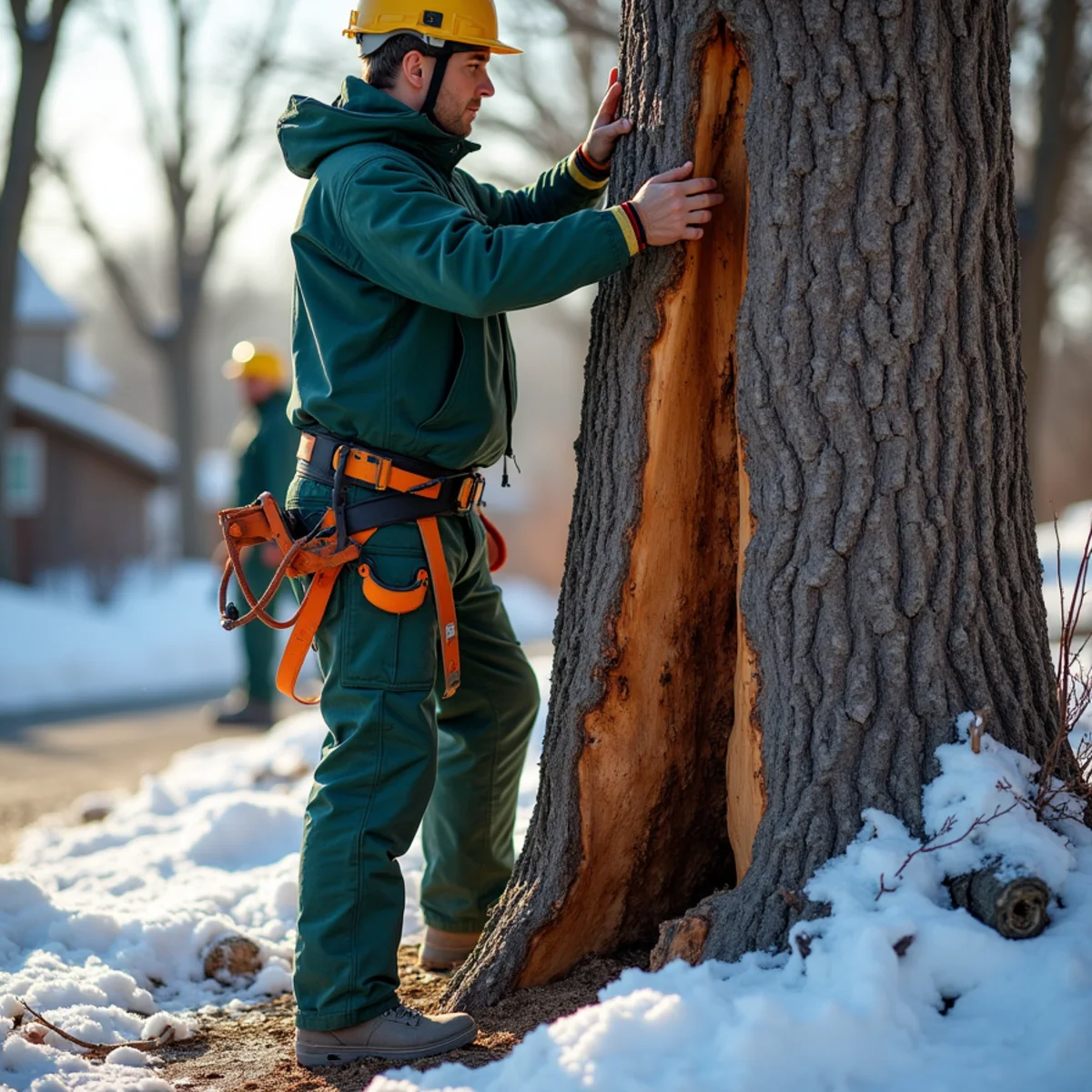
Root movement and changing lean
Trees can grow with a stable lean for decades. A new lean is different, especially when soil lifts on one side, cracks appear around the base, or roots become newly exposed. Root failure affects the support of the entire tree.
Construction, trenching, grade changes, flooding, and repeated saturation can damage roots without immediate canopy symptoms. Tell the estimator what changed around the tree during recent years.
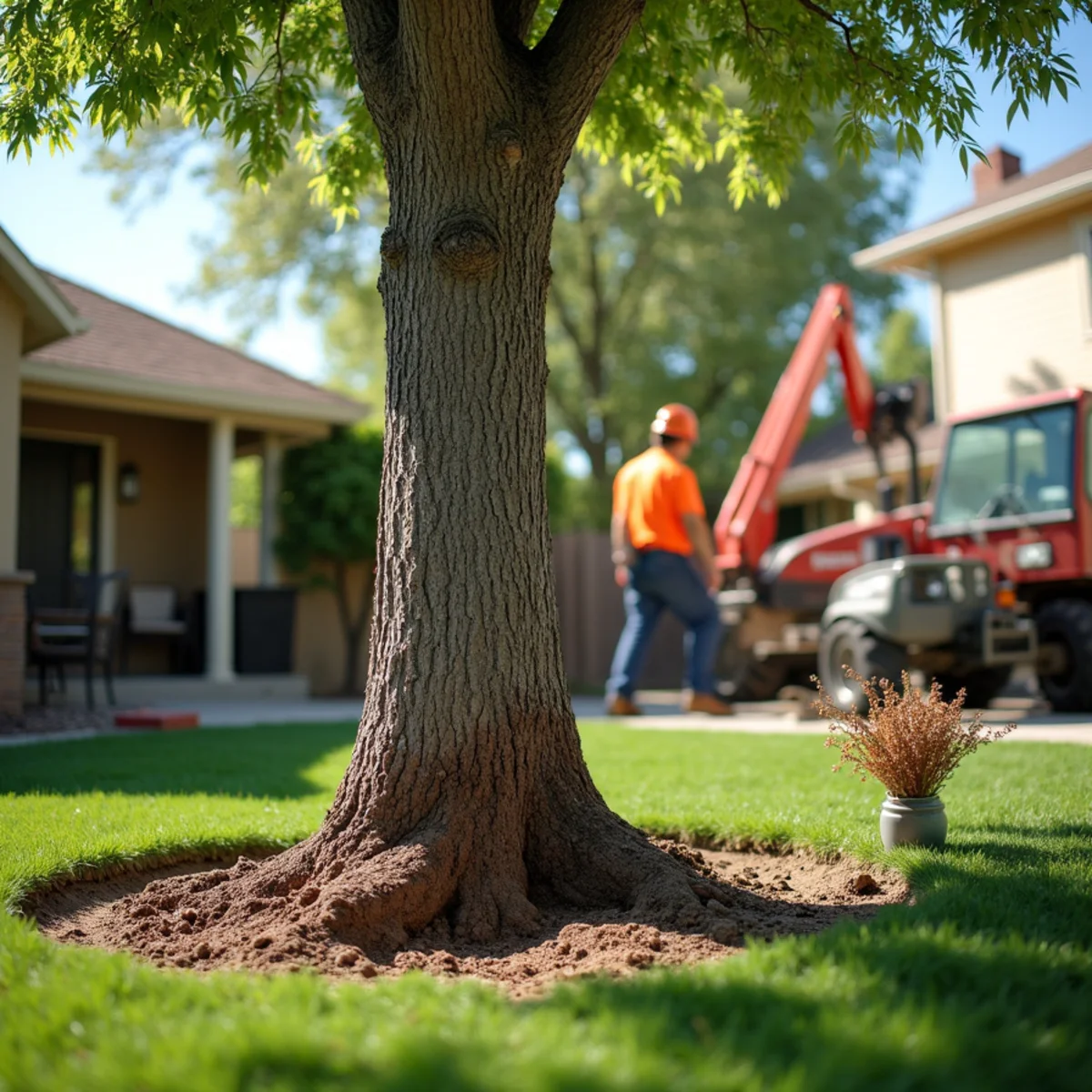
Cavities, decay, and fungal growth
A cavity does not automatically mean removal. Trees can add wood around defects and remain standing for years. The important questions are where the decay is, how much sound structure remains, what the crown is doing, and what targets are present.
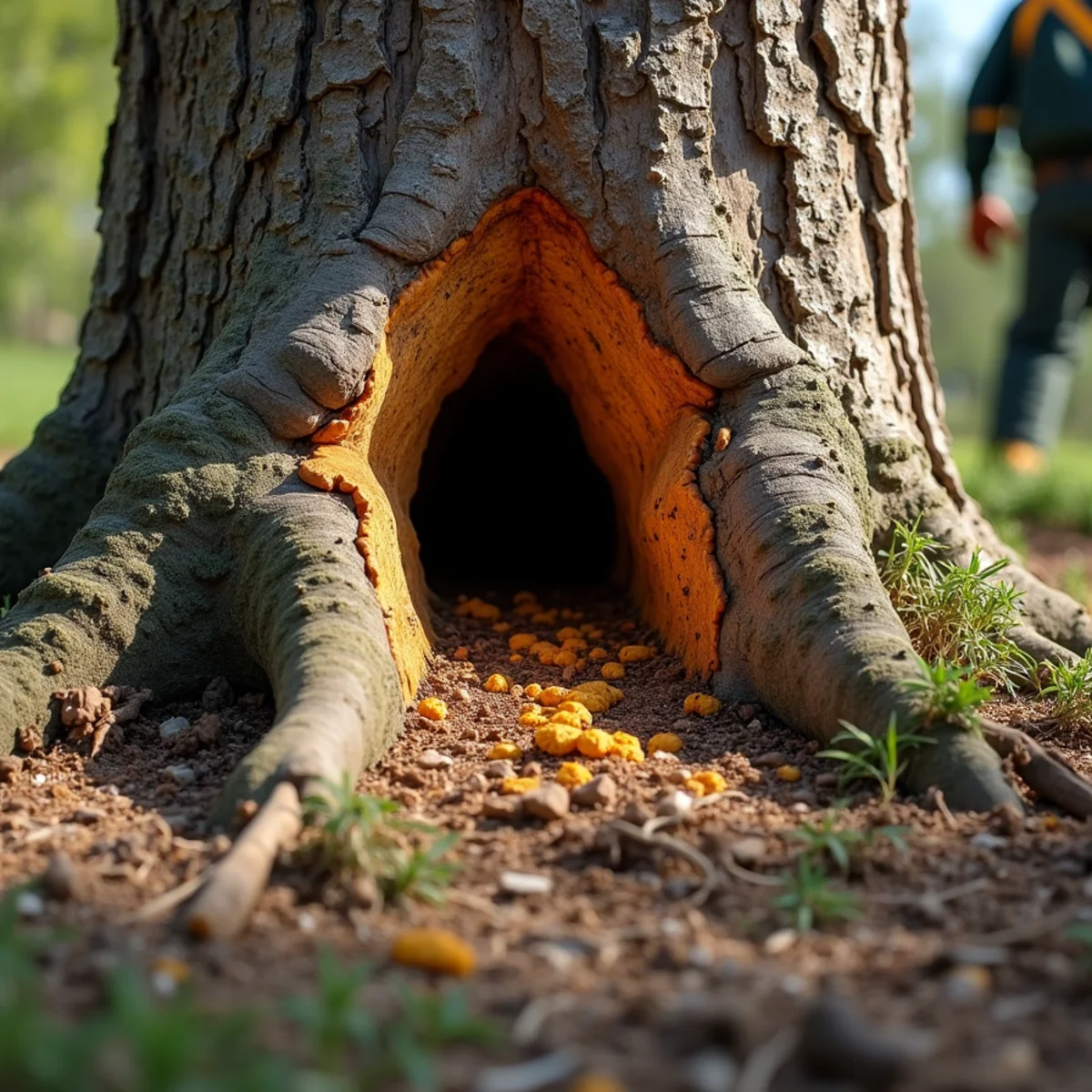
Mushrooms at the base or on roots may be relevant, but identification and location matter. Photograph them because fruiting bodies can disappear before the site visit.
Repeated failures and canopy imbalance
A tree that loses large limbs repeatedly may have an unresolved structural problem. Storms can also leave the remaining crown badly one-sided. Simply cleaning the latest branch from the ground does not address the altered load.
Review prior pruning and failures. Topping often creates clusters of weak regrowth; large old cuts can develop decay; construction may remove one side of the root system. The history helps explain what the tree is showing now.
What not to treat as a diagnosis
Leaf color, moss, surface lichens, small twigs, and a single mushroom can attract attention without telling the whole structural story. Conversely, a full green crown can hide a serious crack or root problem. Homeowners should avoid using one photograph or app result to decide that a tree is safe or doomed.
Record the symptom, its location, when it appeared, and what changed around the tree. Then consider the target. This disciplined description is more useful than attaching a dramatic label. It helps the on-site conversation focus on evidence, consequences, and practical options.
Move from warning sign to a defensible next step
Use four questions in order: What changed? What part could fail? What could it strike? What action safely reduces exposure while the tree is assessed? A fresh crack, lifted root plate, newly hanging branch, or rapidly increasing lean deserves more urgency than an unchanged feature documented over many years. The same defect also carries a different consequence over a bedroom, sidewalk, parking space, or play area than over unused open ground.
Isolate the target before trying to diagnose the tree. Move people, pets, and vehicles when that can be done without entering the drop zone. Do not climb, probe cavities, pull suspended branches, excavate structural roots, or approach a conductor to get a better photograph. Ground-level images from several directions, an older comparison photo, recent weather, and notes about trenching, grade, irrigation, or construction give the site conversation useful history.
Treat the visible sign as evidence, not a verdict. CSU explains that tree-risk decisions consider site history, likelihood of failure, likelihood of striking a target, consequences, and mitigation options; decay by itself does not prove that failure is imminent. The appropriate outcome may be access restriction, monitoring, limited pruning, broader reduction, or removal. A qualified on-site assessment is what connects the observation to that recommendation.
Authoritative Aurora references
What to do next
Use warning signs to decide when to request an assessment, not to diagnose the tree from one symptom. Photograph changes, keep people away from active hazards, and describe the property history. MQ can help prioritize pruning, removal, or monitoring for Aurora-area trees.