
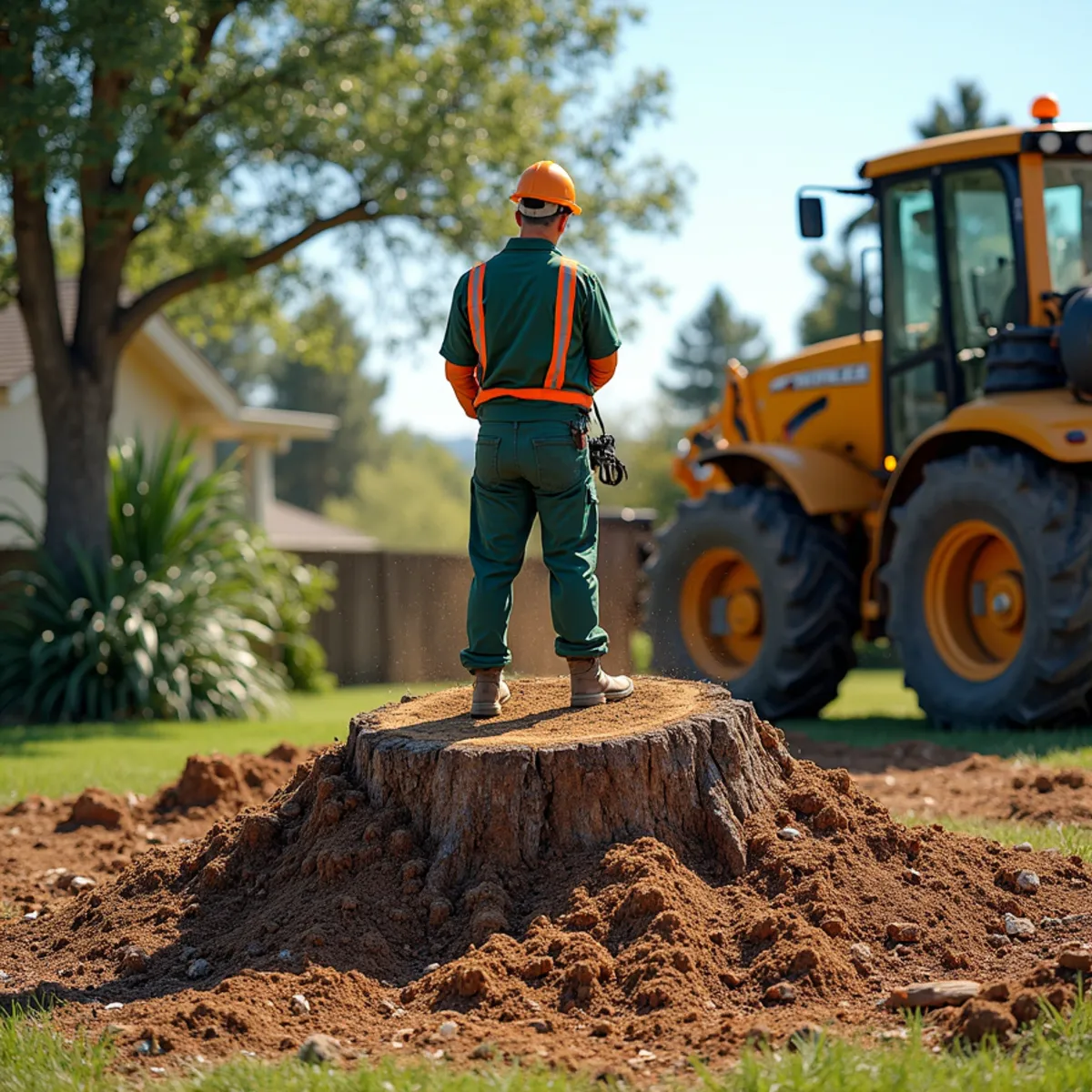
“Stump removal” is often used as a casual name for stump grinding, but the two are not identical. Grinding reduces the stump and selected surface roots below grade. Full excavation attempts to remove the root crown and a larger mass of roots, creating far more soil disturbance. For most residential yards, the right choice depends on the next use of the area.
What stump grinding actually does
A grinder uses a cutting wheel to turn the visible stump and root flare into chips. The working depth is agreed before service. Deeper roots and distant laterals remain in the soil and decay over time.
The process leaves a mixture of wood chips and soil. Some chips can fill the depression temporarily, but organic material settles as it decomposes. If the area will become lawn or a finished bed, excess chips and soil preparation may be needed.
What full excavation involves
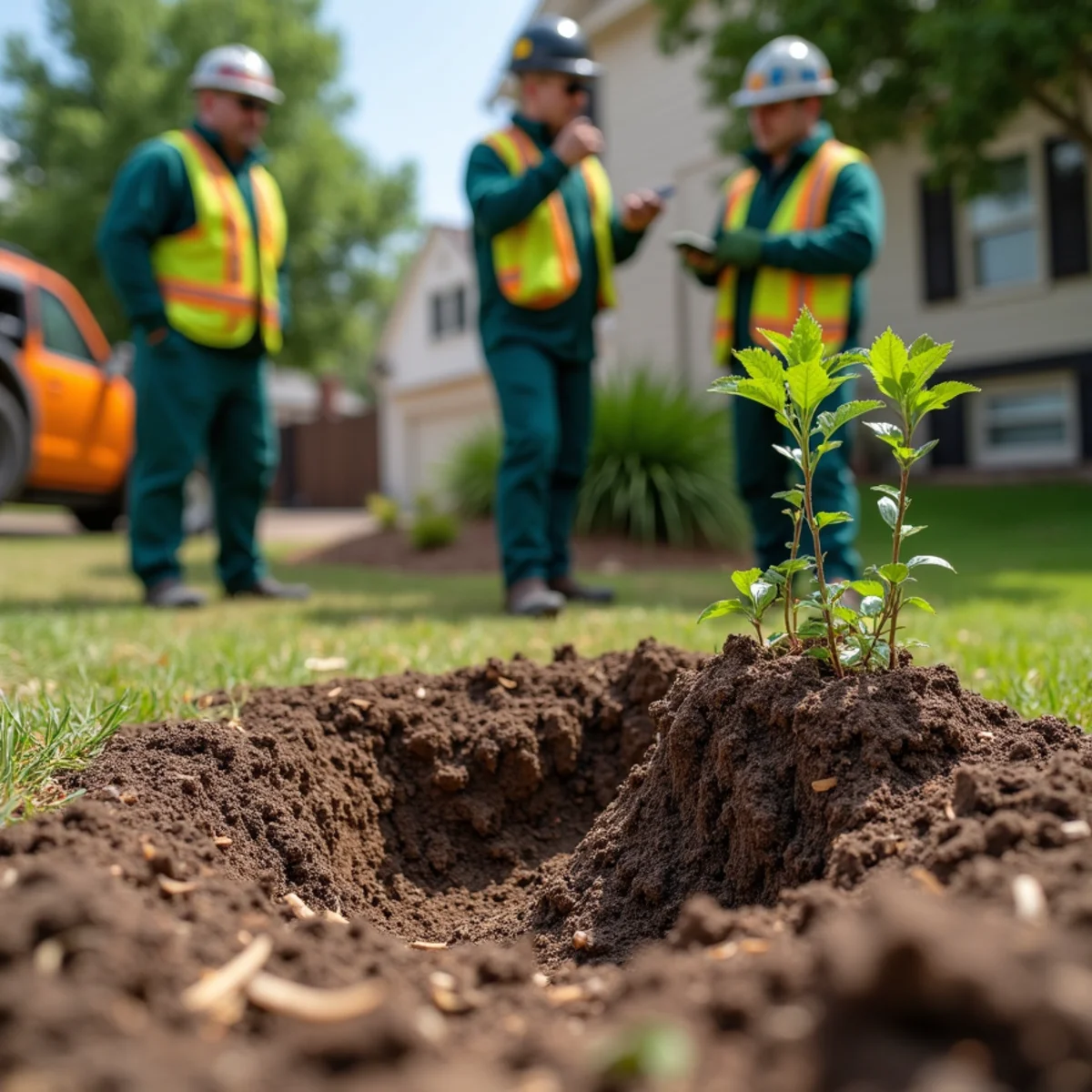
Excavation removes more of the crown and roots by digging or pulling. This can create a large hole, disturb grade, and affect nearby irrigation, utilities, hardscape, and plants. Heavy equipment access may be necessary.
Full removal can make sense when construction or a specific excavation requires the root mass gone. It is usually more disruptive than needed when the goal is simply mowing, a planting bed, or a cleaner appearance.
Think about the next landscape use
For lawn restoration, grinding below the surface and replacing excess chips with suitable soil may be enough. For rock or mulch, the finish may be simpler. For a patio or footing, remaining roots and future settling need a construction-specific plan.
Planting a new tree in the exact spot is often difficult because old roots occupy the hole and decomposition changes soil volume. Shifting the new tree away from the old root mass is frequently more practical.
Access and underground features matter
Gate width, slopes, steps, soft ground, fences, and turning room determine which grinder can reach the stump. The machine also needs a safe working area around the root flare.
Public utility marks may not identify private irrigation, lighting, invisible-fence wire, or homeowner-installed lines. Share what you know and review the area before grinding begins.
Compare estimates by depth and finish
A low stump shaved near grade is a different result from grinding the crown well below the surface and addressing major flare. Ask how depth is measured, which surface roots are included, and where chips will go.
Also clarify whether the crew will haul chips, add soil, seed lawn, or leave the area ready for another contractor. “Stump gone” is not a complete finish specification.
Include the surrounding root flare in the conversation
Stump diameter is often measured across the cut trunk, but the visible flare may spread much wider. Surface roots can cross a future lawn edge, path, or planting bed even after the central stump is ground. Walk the intended finish area and point out which roots interfere with that use so they can be discussed explicitly.
Grinding every visible root is not always safe or practical, particularly near utilities, irrigation, fences, or remaining trees. A clear boundary helps the operator price the actual area and helps the owner understand where later settling or surface roots may remain.
Choose the finish from the next use backward
For lawn or a shallow planting bed, grinding the central stump and agreed surface flare may provide the practical clearance needed with less excavation. For a future footing, wall, utility trench, grade change, or replacement tree in the same footprint, the designer or installer may need a different depth, root, soil, and compaction outcome. Define that next use before choosing a method; the word removed does not specify a construction-ready result.
Map what must remain as carefully as what must go. Irrigation, private lighting, drainage, fence footings, pavement, utilities, rocks, and the roots of neighboring trees can limit grinding or excavation. Colorado digging guidance calls for utility location before excavation, but owners should also disclose private systems that public marking may not identify. Near a possible City tree or City-managed root conflict, confirm ownership and authority before cutting roots.
Use a completion checklist: agreed grinding area and depth, named surface roots, chip removal or reuse, imported soil if needed, final grade, irrigation test, settling expectation, and responsibility for seed, sod, planting, or hardscape preparation. Grinding can create far more chips than the visible stump suggests, and backfilling entirely with fresh chips can compromise the immediate planting surface. Price the final use—not just machine time at the stump.
Authoritative Aurora references
What to do next
For most yards, grinding offers a practical balance of clearance and limited disturbance. Full excavation belongs to projects that truly require the root crown removed. Tell MQ what you want to do with the space so the stump estimate can match the final use.