
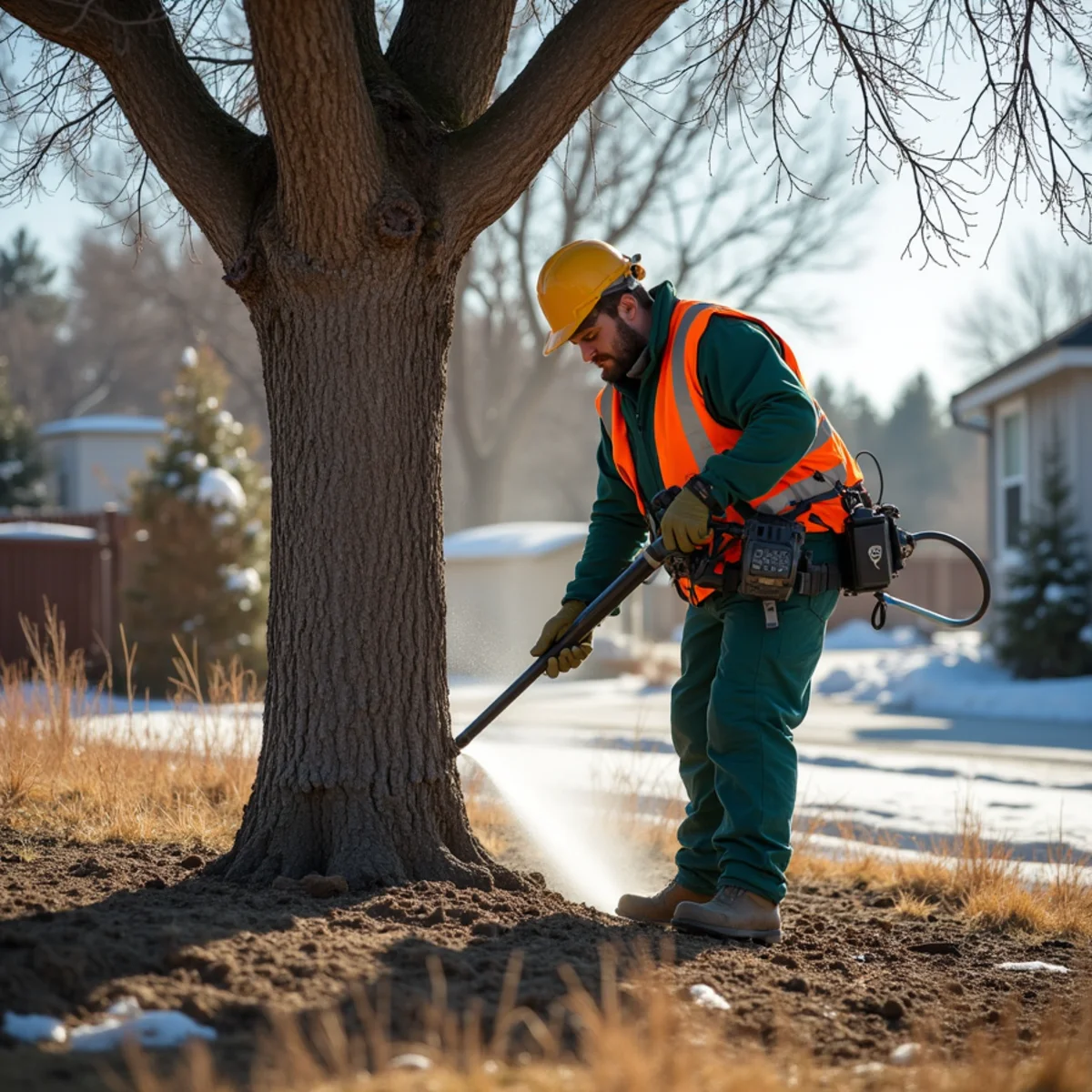
Colorado winters can be cold without being consistently wet. Long dry stretches, low humidity, sun, and wind continue pulling moisture from twigs and evergreen needles while roots may have access to unfrozen soil. Supplemental winter watering can support trees and shrubs, but it must be timed to temperature, soil condition, and actual moisture—not a rigid weekly schedule.
Check soil before adding water
Snow on the ground does not always mean the root zone is moist, and a dry surface does not prove deeper soil is dry. Probe several inches down where possible, away from the trunk, and compare exposed and shaded areas.
Do not water frozen or saturated soil. Water needs somewhere to infiltrate. A warm daytime window with unfrozen ground is more useful than applying water that runs across ice or ponds at the surface.
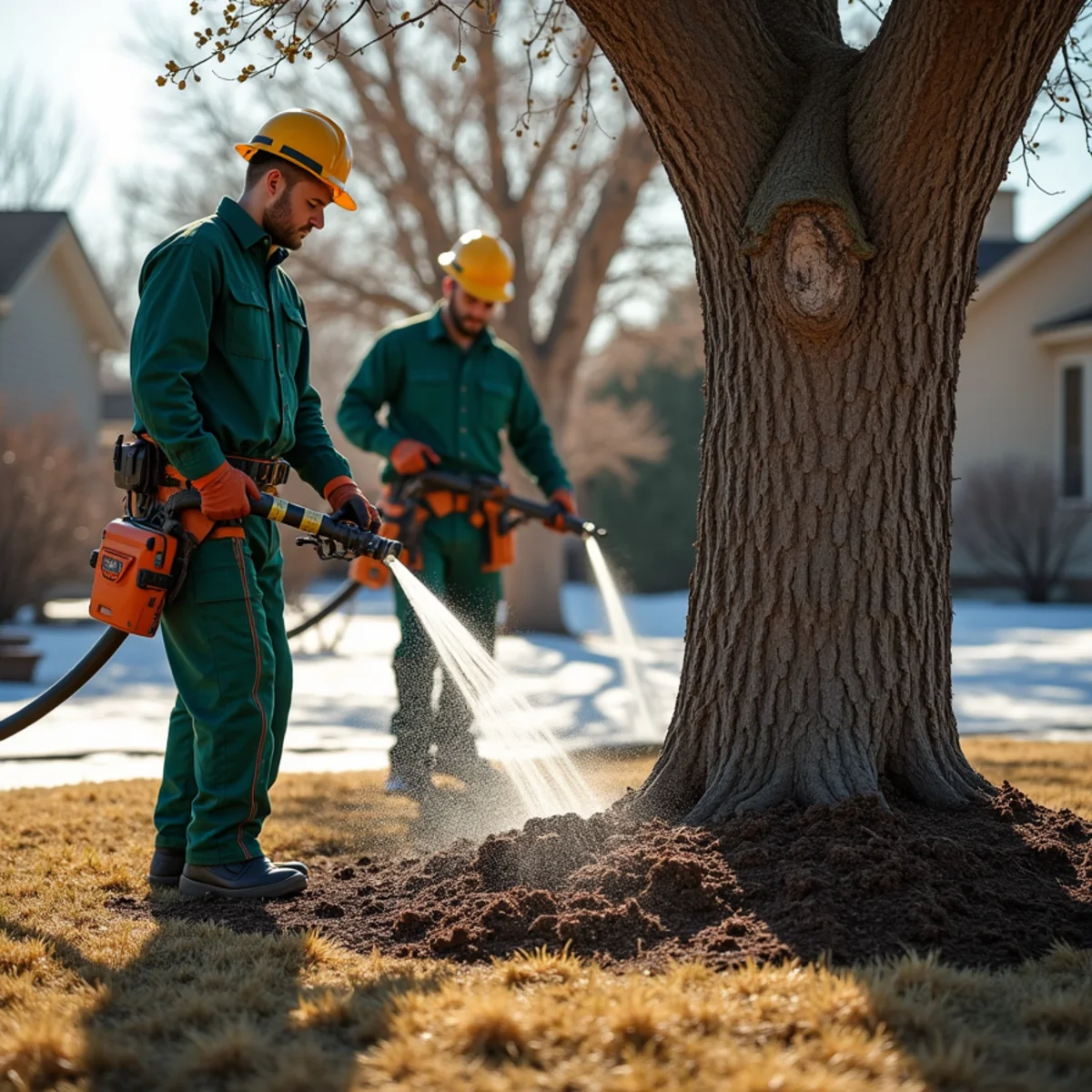
Water the root zone, not the trunk
Most absorbing roots are distributed through the soil beyond the trunk flare. Apply water slowly across a broad area under and beyond the canopy where access allows. Avoid concentrating it directly against bark.
Young trees have smaller developing root zones and may need closer attention. Established trees occupy a much wider area than the original planting hole. Move the application points instead of soaking one circle repeatedly.
Evergreens show winter stress differently
Pines, spruce, and other evergreens keep foliage through winter and can lose moisture on sunny, windy days. Browning may appear later, after the stress occurred. South and west exposures are often demanding.
Water can help when dry soil is part of the problem, but it does not correct every cause of browning. Root damage, salt, pests, disease, and planting depth should remain in the diagnosis.
Mulch can moderate moisture loss
A broad layer of organic mulch helps moderate soil temperature and moisture. Keep the layer modest and pull it back from the trunk so the root flare remains visible and bark stays dry.
Avoid the volcano shape. Piling mulch against the trunk can hold moisture on bark, hide decay, and encourage roots to grow in poor positions.
Coordinate irrigation shutdown with plant needs
Winterized sprinkler systems leave landscapes dependent on precipitation or manual watering. Plan a method that can reach important trees and shrubs without reactivating frozen irrigation lines.
Landscape changes also matter. Newly planted trees, recent root disturbance, reflected heat, and exposed sites can increase attention needs. Record watering and weather so decisions respond to conditions rather than memory.
Track exposure, not just air temperature
Two trees on the same Aurora lot can experience different winter moisture loss. A south-facing evergreen beside reflective pavement may dry faster than a deciduous tree in a sheltered north yard. Wind corridors between homes and open eastern exposures can increase demand even when the thermometer matches a calmer area.
Record where snow persists, where soil thaws first, and which plants show repeated winter browning. Those observations help refine watering zones and may reveal that placement, salt, root damage, or reflected heat contributes to stress. Water is one tool within that broader site picture.
Use five conditions before opening the hose
First, check recent moisture and current rules. Lasting snow cover or meaningful rain may already be supplying the site, while a long dry period can justify supplemental water. Aurora watering requirements can change with drought stage, so verify the City's current restrictions before assuming a winter practice is exempt or appropriate.
Second, confirm that air temperatures are above about 40°F, the ground is not frozen, and there is time for water to soak in before night freezing. Third, check soil in more than one place instead of judging by a dry surface. Compacted clay, a shaded low area, or a buried drip leak can remain wet when an exposed surface looks dry. Do not add water to saturated soil or ice-covered ground.
Fourth, place water where absorbing roots are active across a broad area, not against the trunk. Use a slow application and verify penetration and runoff rather than assuming controller minutes equal usable moisture. Fifth, adjust priority for establishment stage and exposure: recently planted trees, many evergreens, windy corridors, and south- or west-facing sites can dry sooner. Disconnect and drain hoses afterward, then record the date, conditions, and observed soil response so the next decision is based on the site—not memory.
Authoritative Aurora references
What to do next
Winter watering is simple in principle: check soil, choose a warm window, apply slowly across the root zone, and avoid frozen or saturated conditions. If a tree also has dead branches, cracks, or significant decline, watering is not a substitute for an on-site assessment.