
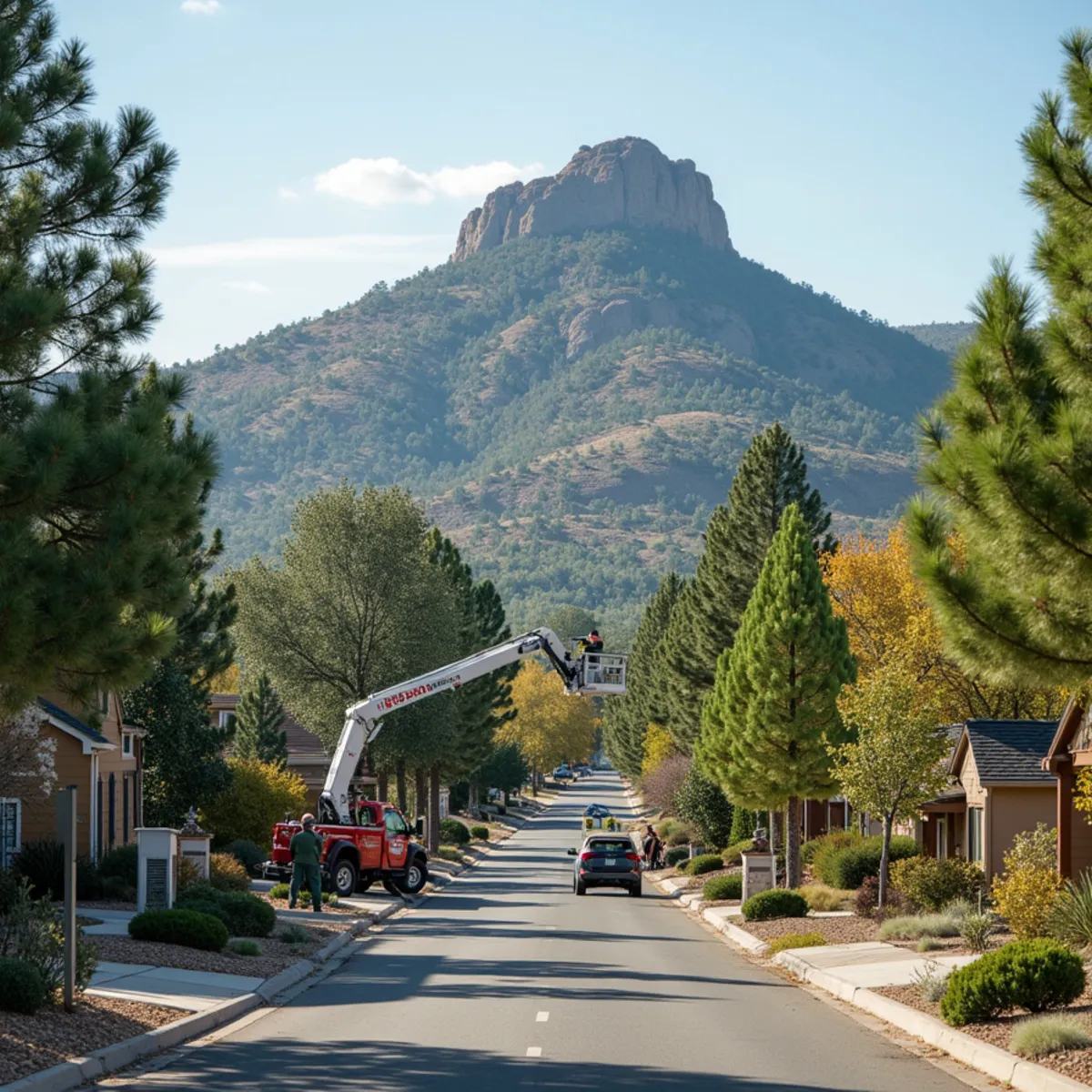
Local tree and landscape planning for Castle Rock
Castle Rock’s elevation, open ridges, newer neighborhoods, and foothill vegetation create demanding conditions for planted trees. Wind, bright sun, dry soil, and sudden snow can expose weak structure, while large planned yards require irrigation and maintenance choices that remain realistic over time.
Young-tree structure and exposed canopies
Many 80108 and 80109 properties contain trees planted during development. Early pruning can correct competing leaders, tight branch clusters, and clearance conflicts before the cuts become large. Irrigation should wet the root zone rather than keeping only the original planting hole damp.
Established trees in 80104 can carry deadwood or overextended limbs toward roofs, drives, and neighboring lots. After wind or snow damage, we assess splits, trunk condition, roots, and remaining canopy. Removal is recommended when the structure no longer offers a reasonable preservation path.
Landscape choices for Castle Rock exposure
Near Philip S. Miller Park, Rock Park, and open ridges, plants and surface materials experience intense sun and wind. Low-water design still needs establishment watering and compatible zones. Rock can reduce replacement cycles but also holds heat and collects debris.
Cleanup, irrigation, shrub work, and hardscape should be sequenced so drainage and access are solved before final materials go down. Phasing can move a property from rough to finished without sacrificing the underlying preparation.
Places and ZIP codes within the local service context
Castle Rock projects may be located near Rock Park, Philip S. Miller Park, Castlewood Canyon, East Plum Creek Trail. Common local ZIP codes on this page include 80104, 80108, 80109. Exact availability is confirmed for the property address when you call.